Short Answer: Same Family, Different Pattern
Agate and jasper are two textures of one mineral family. Both are chalcedony, both sit at 6.5 to 7 on the Mohs scale, and both are made mostly of silica.
One thing separates them: banding.
Banded means agate. Even means jasper. That is the whole test. Color plays no part in it, because agate comes in every color and so does jasper.
This question earns its own article because the two sit next to each other on the shelf at similar prices with similar hardness, and they only separate at the moment you turn them under light. Getting it wrong has a practical cost too, since banded agate and even jasper are two textures of the same mineral that the trade often prices and describes in two different systems.
Where Both Sit: Quartz, Chalcedony, and Everything Else
To see how agate and jasper relate, you have to go up one level.
Quartz is the large mineral family built from silicon dioxide, and it splits by whether the crystal is visible to the eye:
- Macrocrystalline: crystals grow large enough to see, like rock crystal, amethyst, and citrine. The six-sided prism is the crystal itself.
- Cryptocrystalline: crystals too small to see without a microscope, and this branch is called chalcedony.
Agate, jasper, and carnelian are all members of that chalcedony branch. So is agate a quartz? Yes, but it is the cryptocrystalline branch of quartz, a different form from the material that grows a visible prism.
Within chalcedony, the common members split on two axes: whether there is banding, and whether light passes through.
Banded | Not banded | |
Translucent, light at the edges | Agate | Carnelian |
Opaque, blocks light completely | Onyx sits here | Jasper |
That table is the map for this whole article. The three red stones each occupy one cell: red agate is banded and translucent, carnelian is even and translucent, and red jasper is even and opaque.
What Is Agate?
Agate is banded chalcedony. The bands can be stripes, concentric layers, eye patterns, or cloudy zones, and the color range is enormous, running from white, grey, and blue through green to red and brown.
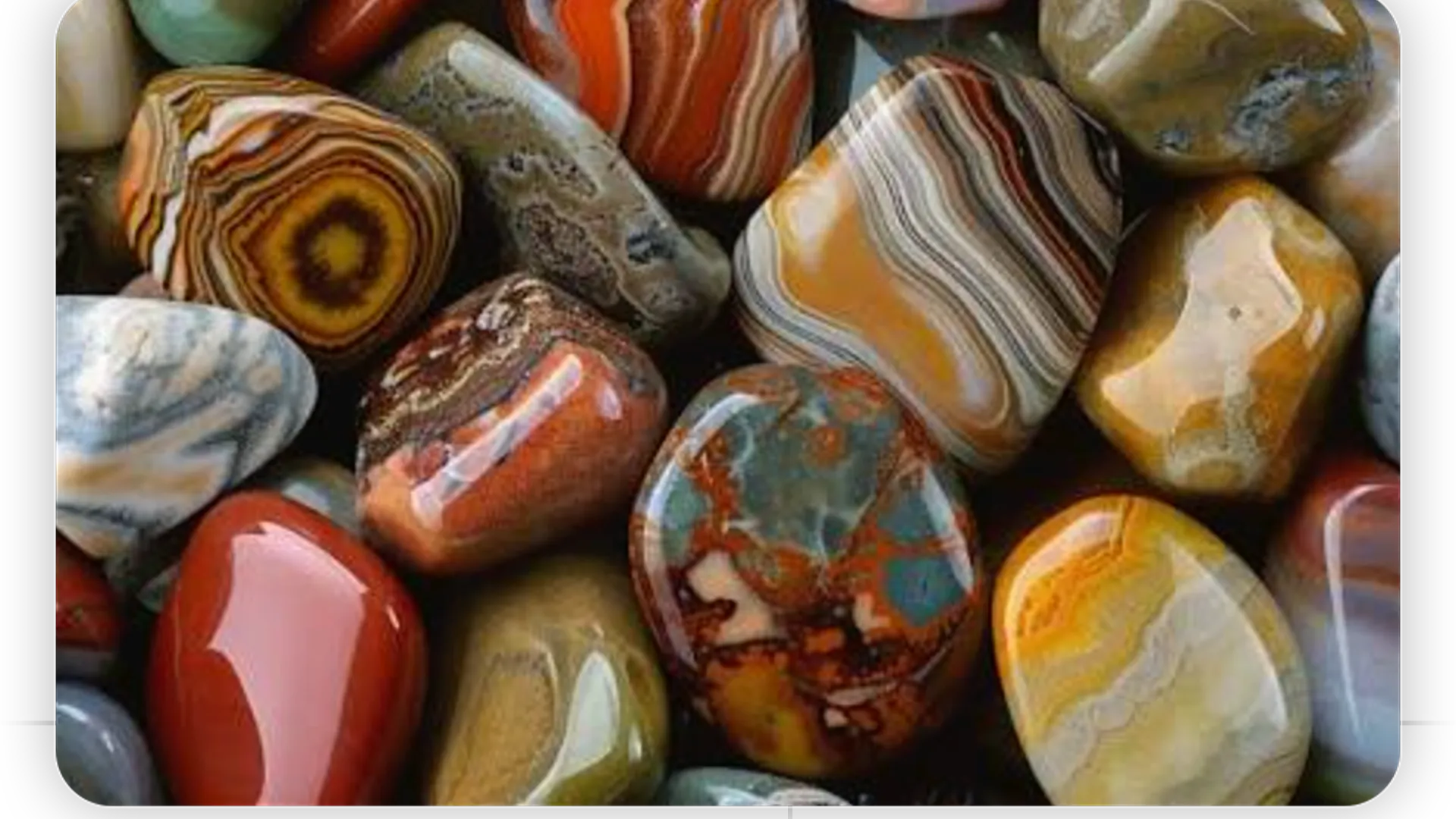
It usually forms in a cavity inside volcanic rock: silica-rich water seeps in and deposits layer after layer along the wall, and each layer differs slightly in composition, which leaves the banding. That origin also answers another common question, because the wall of a geode is often lined with agate. A geode is not an alternative to agate. It is the form agate most commonly grows in.
Agate rates 6.5 to 7 on the Mohs scale, has a specific gravity around 2.6, a vitreous to waxy luster, and thin edges that usually transmit light.
What Is Jasper?
Jasper is opaque, evenly colored chalcedony. It blocks light completely, even along its thinnest edge, its surface is matte and slightly earthy, and it often carries faint, irregular soil-like streaks.
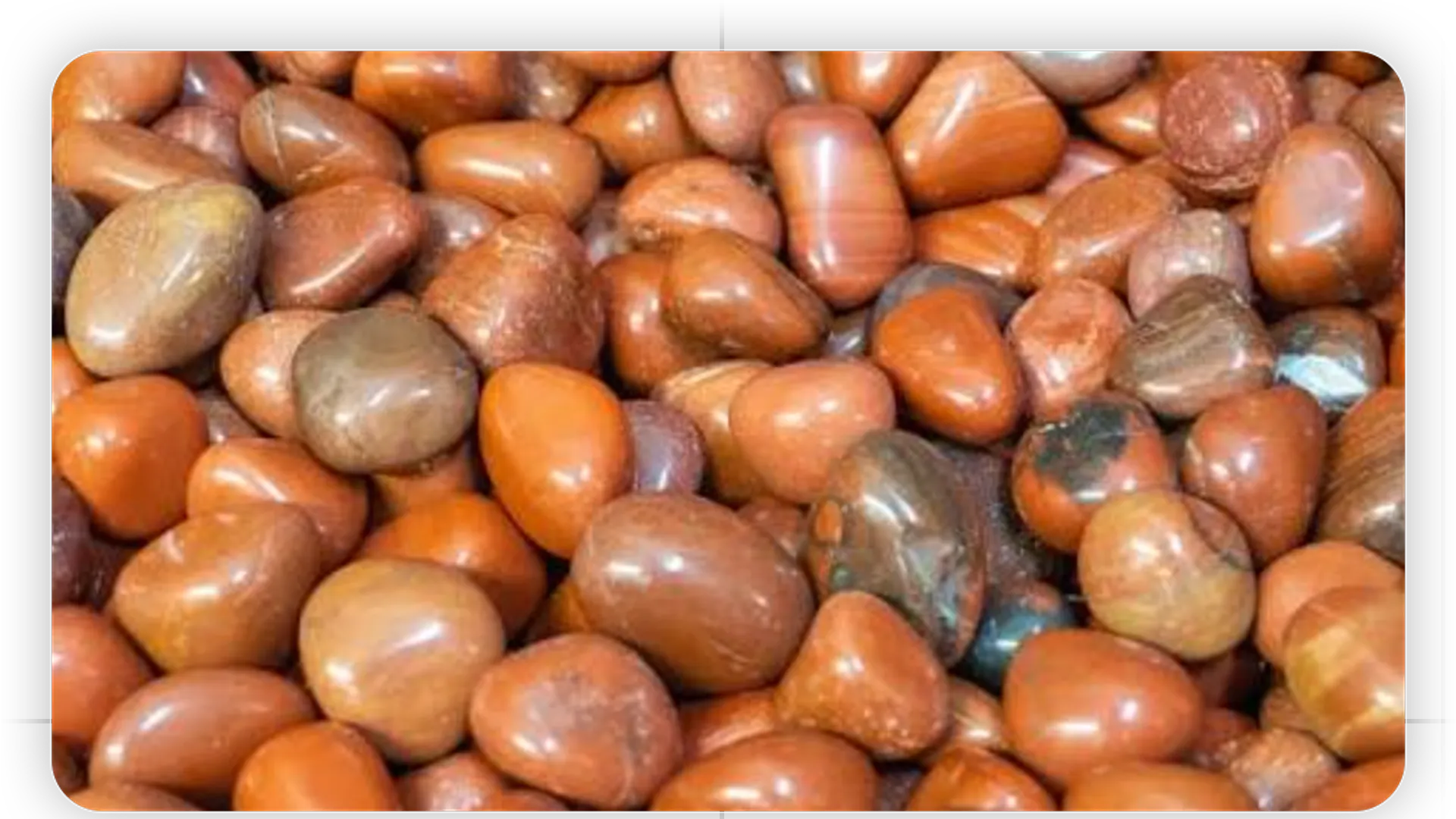
Its color range is just as wide as agate's, covering red, yellow, brown, and green, and it frequently mixes several colors in one stone, as in picture jasper.
Its formation is different: jasper usually forms when impurity-rich sediment or hydrothermal fluid consolidates as a whole rather than depositing in layers. The impurities are scattered through the entire stone instead of settling in bands, which is the root reason the texture comes out even.
Jasper also rates 6.5 to 7 on the Mohs scale, with a specific gravity around 2.6.
Side by Side
Agate | Jasper | |
What it is | Banded chalcedony | Opaque, even chalcedony |
Banding | Yes, stripes or concentric layers | None |
Transparency | Translucent at the edges | Opaque, blocks light |
Surface | Vitreous to waxy, brighter when polished | Matte, earthy |
Texture | Bands, color layers, eye patterns | Faint soil-like streaks, no bands |
Color range | Very wide, white through grey, blue, green, red, brown | Very wide, can mix several in one stone |
Formation | Layer by layer on a cavity wall | Impurity-rich sediment, consolidated whole |
Mohs hardness | 6.5–7 | 6.5–7 |
Specific gravity | Around 2.6 | Around 2.6 |
Five Elements (our store) | Fire (red agate) | Fire (red jasper) |
Read the table from the top and two rows do the work: banding and transparency. Hardness, specific gravity, family, and color range all overlap. They part ways on interior texture and nothing else.
The Banding Test: The Only Reliable One
Look for banding. Hold the stone to a strong light, and a phone flashlight is enough, and turn it slowly. Stripes, color layers, or concentric rings mean agate. Color that runs uniform means jasper.
Check whether it blocks light. Jasper blocks light completely, even at its thinnest edge. If a stone shows no bands but does transmit light, it is neither jasper nor ordinary agate, and it is more likely a member of the carnelian group.
Two common misreads. One is treating an agate's eye pattern as a flaw; that is natural formation, not a crack. The other is reading jasper's soil-like streaks as banding; those streaks are irregular and earthy, while agate's bands are continuous and directional.
One honest caveat. The boundaries within the chalcedony family are genuinely contested in the literature, with some sources separating certain jaspers out and others folding pale jaspers back into agate. If your goal is a purchase decision, the more useful question is "does this stone carry bands," not "what should this stone be called academically."
What About Hardness?
Many people search for which of the two is harder, and the answer may disappoint: there is no measurable difference.
Both sit at 6.5 to 7 on the Mohs scale. That means:
- A scratch test is useless. Neither can scratch the other.
- Weighing is useless. Both sit around 2.6 in specific gravity.
- "Which is more durable" has no mineralogical answer. Durability is decided by the craft, not the stone type.
So the next time someone claims jasper is harder than agate, or the reverse, they are not reading that off the mineralogy.
Is a Geode a Different Stone?
No, and this is one of the most common confusions.
A geode is a form, not a stone type. It is a cavity inside rock, often lined with a layer of agate, sometimes with crystals growing at the center. When you crack one open, the concentric layers you see are agate.
So "agate vs geode" is a question pointed in the wrong direction: agate can be inside a geode, and what lines a geode is very often agate. One is a texture, the other is a container.
The practical use of this section for a bracelet buyer is that geode lining is usually the most clearly banded and richest agate there is, but because it grows on the wall of a cavity, mining and cutting costs are high, which is why it mostly ends up in display pieces rather than beads.
Tree Agate vs Moss Agate
This pair is another high-frequency comparison in the data, and it deserves its own answer. Both belong to the dendritic group and they look alike, so the difference is where the tree pattern lives.
Moss agate has its dendritic pattern inside the stone, carried in by oxides of chromium, manganese, or iron during growth. The pattern has depth, shifting as you turn the stone in light, and it is usually green.
Tree agate has its tree pattern on the surface, from oxides that penetrated the stone later. The pattern is flat, painted on rather than grown in, and it usually runs brown, black, and white.
One line holds it: in moss agate the tree grows inside the stone, and in tree agate the tree sits on the surface.
To be plain about it: we do not carry moss agate or tree agate, so this section is knowledge rather than a buying recommendation. If what you want is dendritic-looking texture, the banded red agate below is the closest thing in the shop.
Which One Should You Choose?
Choose agate if you want banding and layering. It changes as you turn it, which makes it visually richer, and it suits anyone who wants some detail. Our banded red agate: Red Agate bracelet
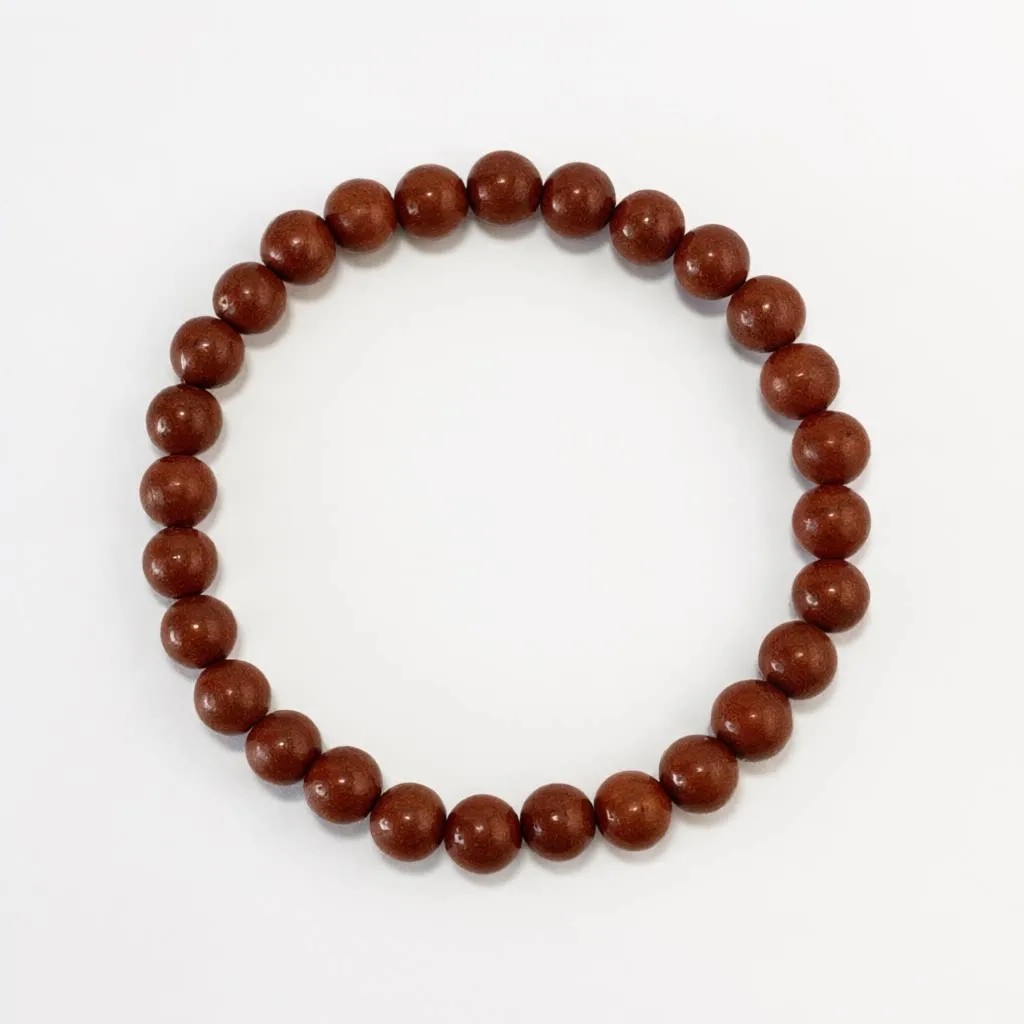
Choose jasper if you want evenness and weight. Its color runs uniform, its surface stays matte, and it reads quieter, which suits anyone who wants a calm stone. Our opaque red jasper: Red Jasper bracelet
Wearing both is reasonable too. Banded next to even makes the contrast easier to see, and the pair reads as layered rather than repeated.
The red family has three separate comparisons already on the site, one for each question you might be asking:
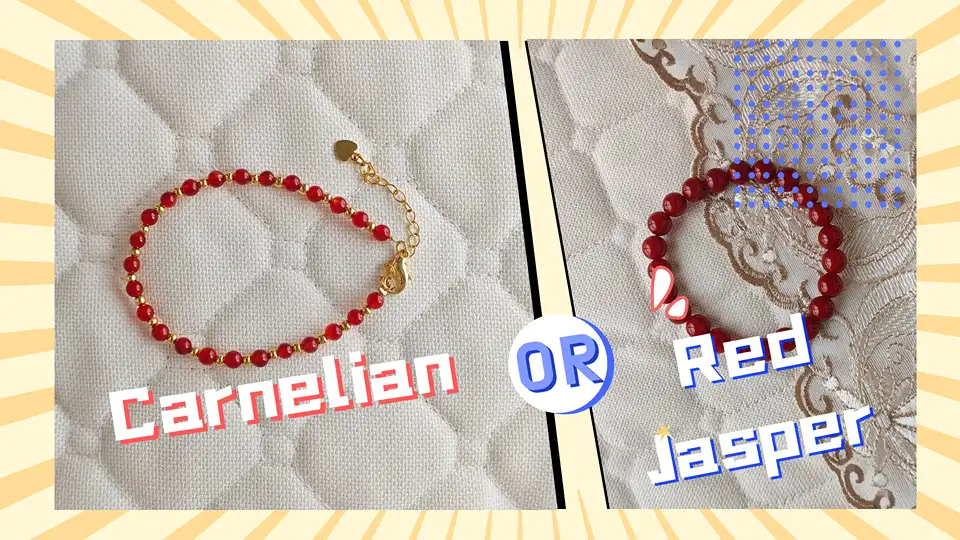
- Red agate vs carnelian, the top row of the table above: Red Agate vs Carnelian
- Red jasper vs red agate, the bottom row: Red Jasper vs Red Agate
- Why carnelian is often called red agate, the naming history: Is Carnelian an Agate? Carnelian vs Red Jasper
If you are not sure which element fits you, our Element Quiz takes about a minute.
Our Banded and Even Bracelets
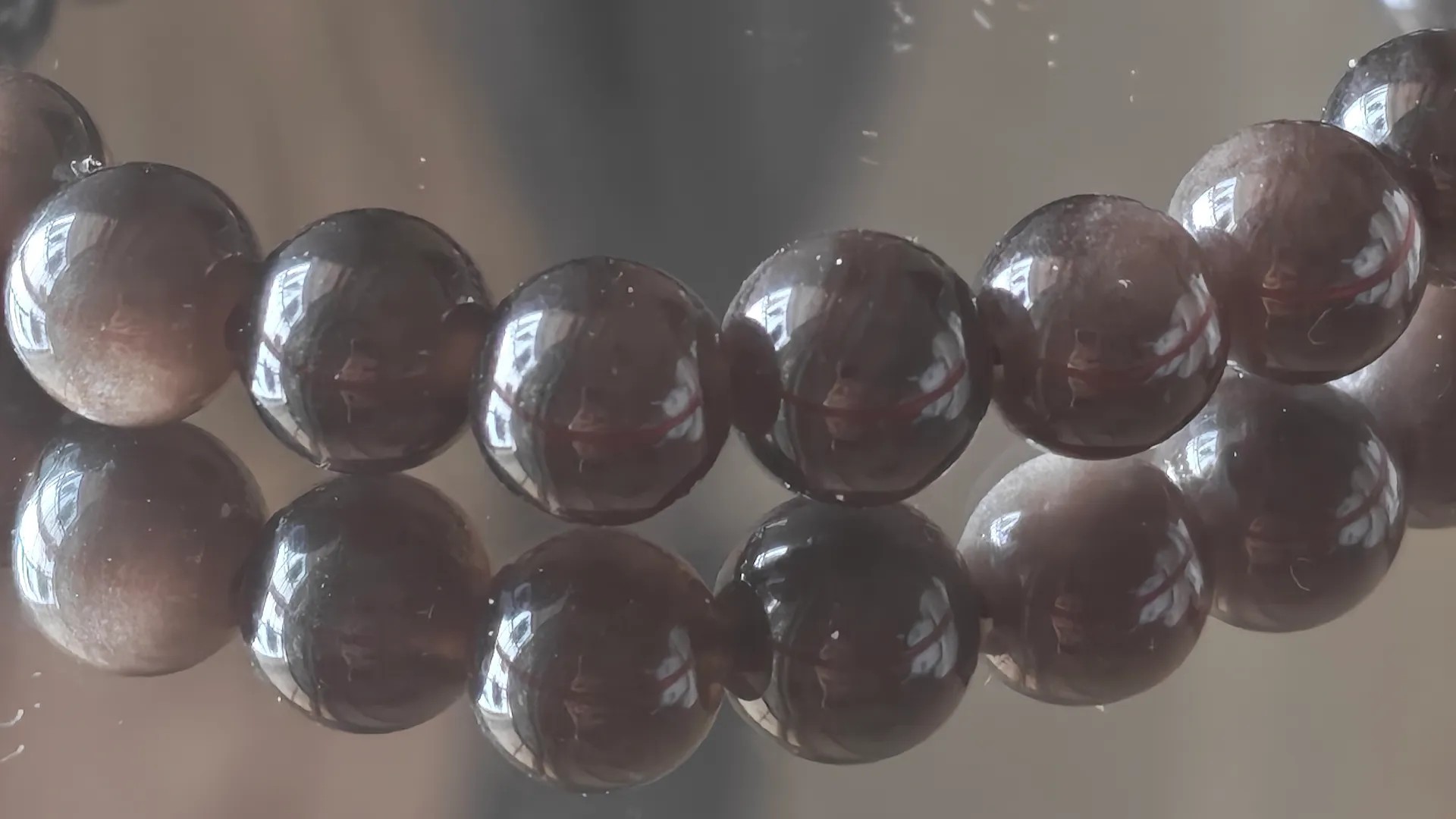
Red Agate Bracelet (banded): 6 mm or 8 mm natural red agate beads on a durable stretch cord, sized to fit most wrists at about 7 in / 18 cm. Deep layered red tones with natural banding and subtle variation from bead to bead. This is the banded, translucent cell of the table.
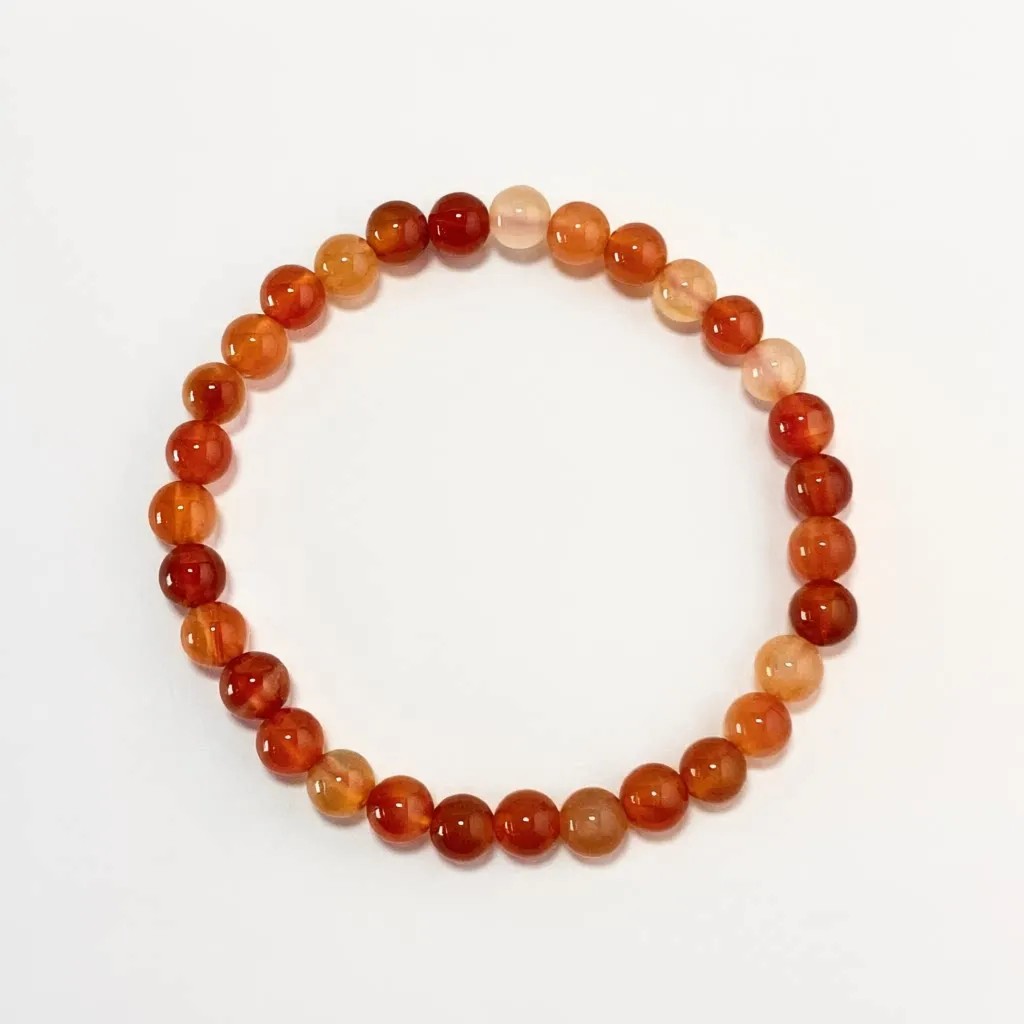
Red Jasper Bracelet (even): 6 mm natural red jasper beads on a durable stretch cord, sized to fit most wrists at about 7 in / 18 cm. Deep-red microcrystalline chalcedony, opaque and even in color. This is the even, opaque cell of the table.