Short Answer: One Line That Explains Everything Else
Black tourmaline is a crystalline mineral. Obsidian is natural volcanic glass. That is the deepest line between them, and every other difference grows out of it.
On the Mohs scale, black tourmaline sits at 7 to 7.5 and obsidian at 5 to 5.5, nearly two full steps apart. Held at the same size, they also feel different, because tourmaline is noticeably heavier.
If all you want is to identify a stone in your hand, the two fastest moves are to weigh it and look at the fracture. Both are covered below.
What Is Black Tourmaline?
Black tourmaline, usually sold as schorl, is the most common black member of the tourmaline group, an iron-aluminum borosilicate. The boron matters: tourmaline is one of the few common gem minerals that contains it, and boron is part of why it grows into slender trigonal prisms with parallel striations running down the faces.
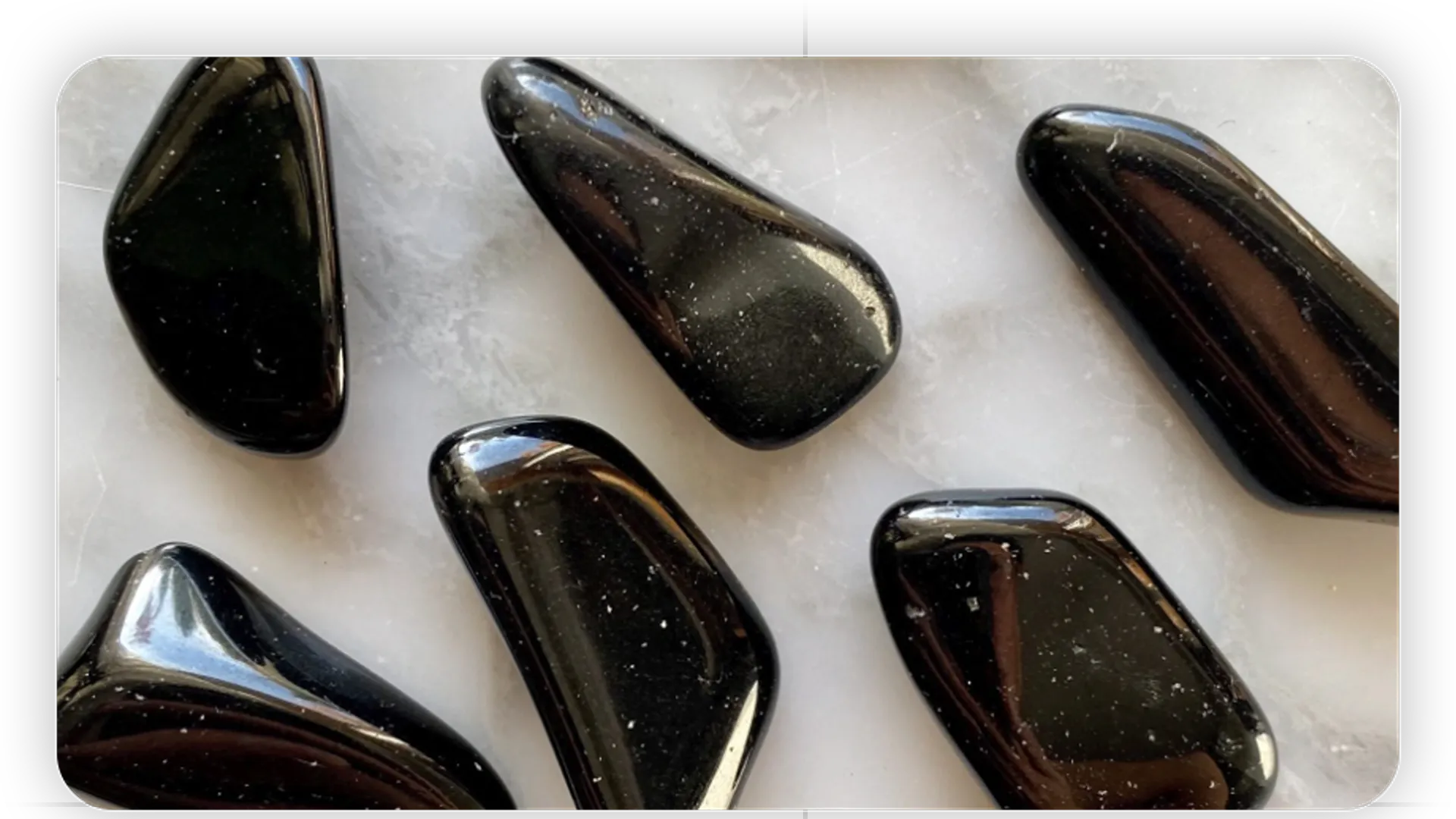
It also carries two electrical properties that few minerals share. Tourmaline is both piezoelectric and pyroelectric: it generates charge under pressure and under heat. Dutch traders once used this to pick ash out of a fire, warming the stone and letting static pull the cinders to it, which is how it earned the name aschentrekker, the ash drawer.
Black tourmaline forms in granitic pegmatites and metamorphic rocks, where slow growth allows full prisms to develop. Major sources include Brazil, Afghanistan, Madagascar, Pakistan, and the state of Maine.
It rates 7 to 7.5 on the Mohs scale, with a specific gravity of 3.0 to 3.3, a vitreous to resinous luster, and an opaque body that can pass a dark tone through thin edges.
What Is Obsidian?
Obsidian is not a mineral. In mineralogical terms it is a mineraloid: silica-rich lava leaves a volcano and cools so fast that the atoms never arrange into a crystal structure. The melt freezes into glass instead.
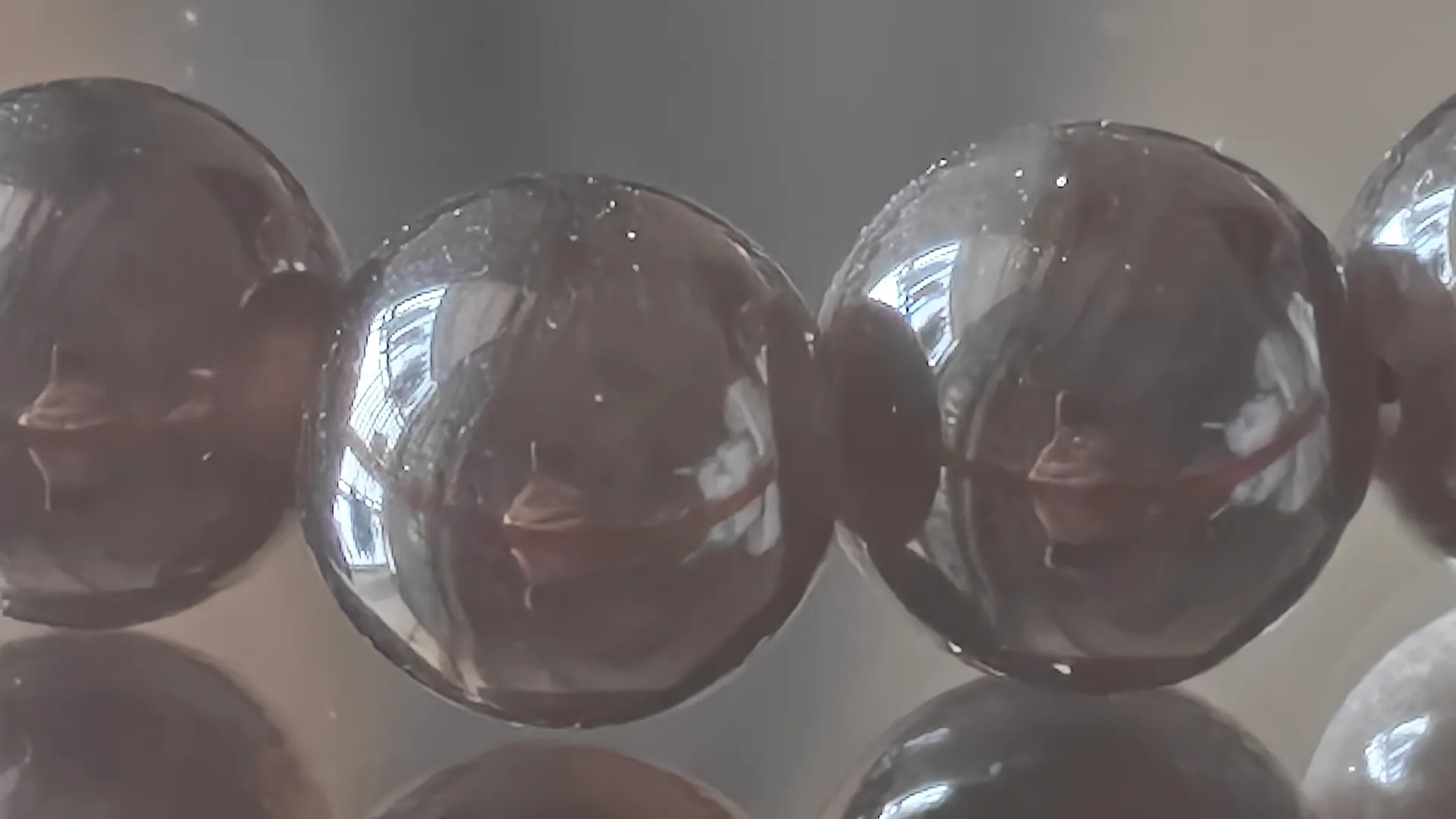
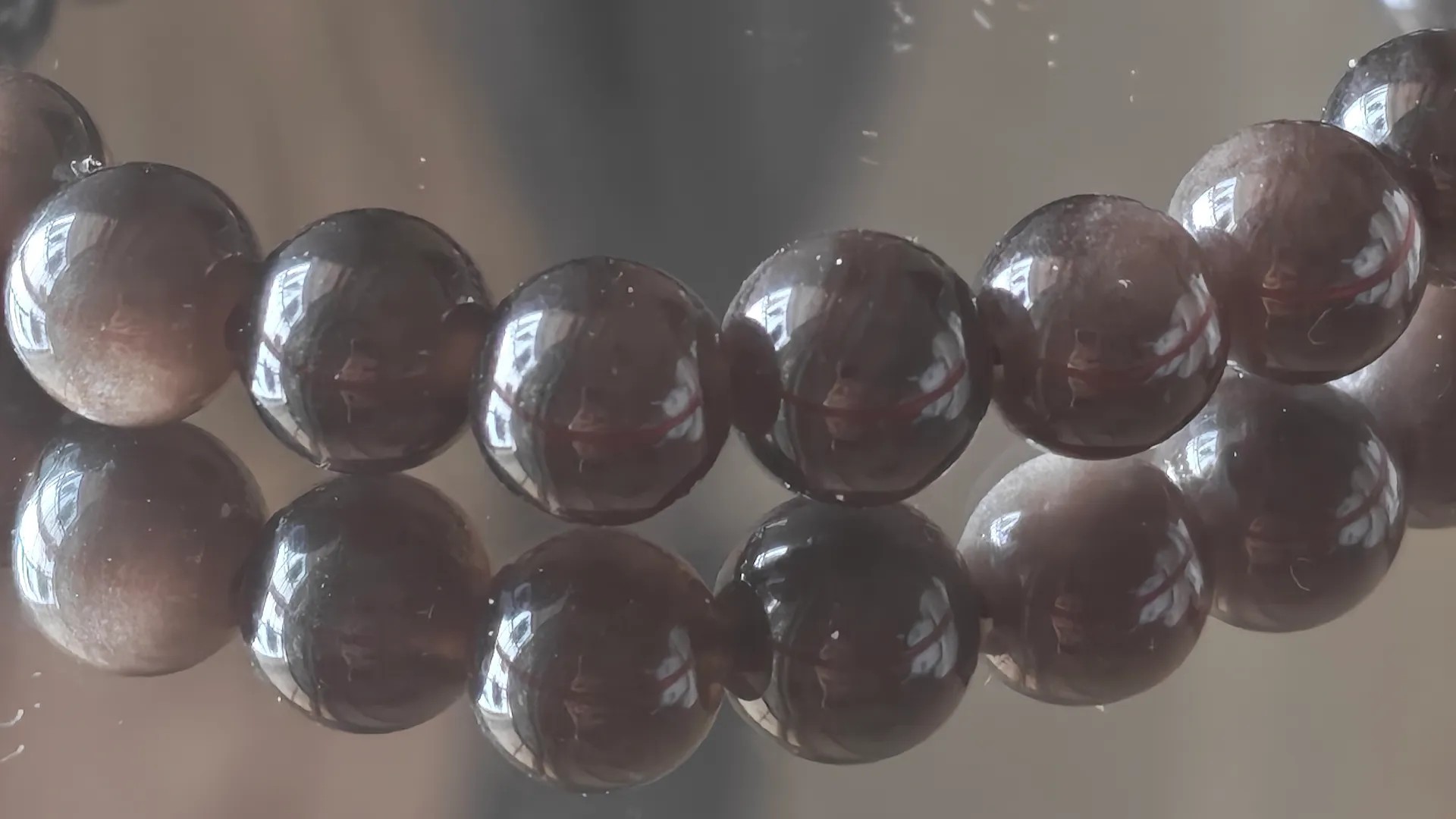
That origin explains almost everything about it. Obsidian rates 5 to 5.5 on the Mohs scale (some sources give 5 to 6), with a specific gravity of 2.3 to 2.6. Its fracture is distinctly conchoidal, and broken edges can thin to a genuine edge, which is why prehistoric people knapped it into blades and arrowheads. Being amorphous, it has no crystal form and cannot grow any regular geometric face. It is a glassy mass, and that is all it is.
Its luster also runs brighter and sharper than tourmaline's. Thin edges often transmit brown, grey, or green, which tourmaline rarely does.
Obsidian forms at volcanoes worldwide, so origin tells you nothing about which stone you are holding.
Where Does Black Onyx Fit?
Black onyx is the third black stone, and it gets pulled into this comparison often enough to deserve its own answer.
Onyx is banded chalcedony, part of the microcrystalline quartz family. It is neither tourmaline nor glass. It rates 6.5 to 7 on the Mohs scale, carries a waxy luster, and shows an even, slightly muted color with no striations and no glassy fracture.
One line holds all three: striations mean tourmaline, a glassy fracture means obsidian, and something black, even, and waxy means onyx.
And if a fourth candidate turns up: hematite has a metallic luster and a reddish-brown streak, which separates it from all three at a glance.
Side by Side
Black Tourmaline | Obsidian | Black Onyx | |
What it is | Crystalline mineral | Natural volcanic glass | Banded chalcedony |
Family | Tourmaline group, boron silicate | None, amorphous | Microcrystalline quartz |
Crystal system | Trigonal | None | Cryptocrystalline |
Mohs hardness | 7–7.5 | 5–5.5 | 6.5–7 |
Specific gravity | 3.0–3.3 | 2.3–2.6 | Around 2.6 |
Fracture | Uneven to subconchoidal, chips | Conchoidal, edges can thin to sharp | Uneven |
Luster | Vitreous to resinous | Strongly vitreous | Waxy |
Electrical properties | Piezoelectric and pyroelectric | None | None |
Formation | Slow growth in pegmatite and metamorphic rock | Rapid cooling of silica-rich lava | Chalcedony banding, hydrothermal fill |
Five Elements (our store) | Not carried | Water | Not carried |
Read the table from the top and two rows do the work: what it is, and hardness. One is a crystal whose atoms finished arranging; the other is glass whose atoms never got the chance. One sits above 7; the other just clears 5. Every identification test and every care instruction below is a consequence of those two rows.
One footnote on the hardness row: sources give obsidian 5 to 5.5 or 5 to 6, and this article uses 5 to 5.5. Either way, nearly two full steps separate it from tourmaline, and that conclusion does not move.
How to Tell Them Apart: Three Tests Without Tools, and One Limit
1. Look for striations. Raw black tourmaline grows in prisms with fine parallel lines running down the faces, and a cross-section is close to a rounded triangle. Obsidian is a glassy mass with no crystal faces, so it has no striations of any kind.
2. Weigh them. At the same size, tourmaline is noticeably heavier: a specific gravity above 3.0 against 2.3 to 2.6. This is the most useful of the three, because it needs nothing but your hands.
3. Look at the fracture. Obsidian breaks conchoidally, and the edges can thin to something genuinely sharp. Tourmaline breaks unevenly and, being brittle, tends to chip rather than open a clean curved surface.
Hardness separates them too: tourmaline scratches glass, obsidian does not, and a steel knife can mark it.
One honest limit. All three tests hold for raw stones and specimens only. Polished beads have the striations and fracture surfaces ground away, and the weight gap between two same-size beads is too small to feel. If your goal is to verify a finished bracelet, these tests will not help you. For polished beads the only reliable route is to ask the seller for the stone name.
Which One Survives Daily Wear?
Black tourmaline, 7–7.5 | Obsidian, 5–5.5 | |
Scratch resistance | Good, daily friendly | Fair, marks against harder objects |
Main risk | Hard knocks, especially if cracked | Impact, sudden temperature swings, long soaking |
Cleaning | Soft cloth, no ultrasonic | Soft cloth, quick rinse then dry immediately |
The thing limiting your bracelet is not the stone. It is the cord. Both stones are sold on stretch cord, and stretch cord degrades with water, sweat, and UV, usually within months. So the useful question is not which stone is harder. It is how much water, sweat, and sunscreen your day involves. Taking the bracelet off to wash your hands does more than choosing the harder stone.
Our own obsidian bracelet follows the same care standard listed above: avoid prolonged exposure to water, apply fragrance before wearing, store separately when not worn, and wipe gently with a soft cloth. For the fuller routine, see our guide to cleansing and charging a crystal bracelet.
Energy and Intention
Black tourmaline is traditionally associated with protection, grounding, and boundaries, and it is often described as a line: a way of marking your own range. Obsidian is traditionally associated with introspection, personal truth, and clear observation, and it is often described as a mirror: a way of seeing what is actually happening, paired with the loosening of old patterns.
One way to hold it: tourmaline draws the line, obsidian holds the mirror.
In our store, obsidian belongs to Water in the Five Elements framework, carrying flow, intuition, reflection, and adaptation. We describe it as a deep glassy black surface with a long-standing association with protection and grounding, and a steady companion for the moments when you need to feel centered, clear, and shielded from noise.
Black tourmaline has no Five Elements position in our store, and this article will not invent one. If you want to know which element fits you, our Element Quiz takes about a minute.
Which One Should You Choose?
Choose black tourmaline if durability and a clear boundary are what you are after. It is harder, heavier, and more forgiving of daily life, which suits anyone who plans to wear a bracelet every day without thinking about it.
To be plain about it: we do not carry black tourmaline. If that is what brought you here, our obsidian bracelet is the closest thing in the shop.
Choose obsidian if weight, brightness, and budget matter more. It is lighter and sharper, with a glassy luster tourmaline does not give, and it usually costs less. The trade-off is 5 to 5.5 on the Mohs scale, so knocks and soaking need more care.
Wearing both together is fine. There is no mineralogical conflict, and pairing them is a common choice rather than a compromise. The only condition is that the pair's care level is set by the more fragile stone.
If you are still between them, take the Element Quiz first, then come back to this section.
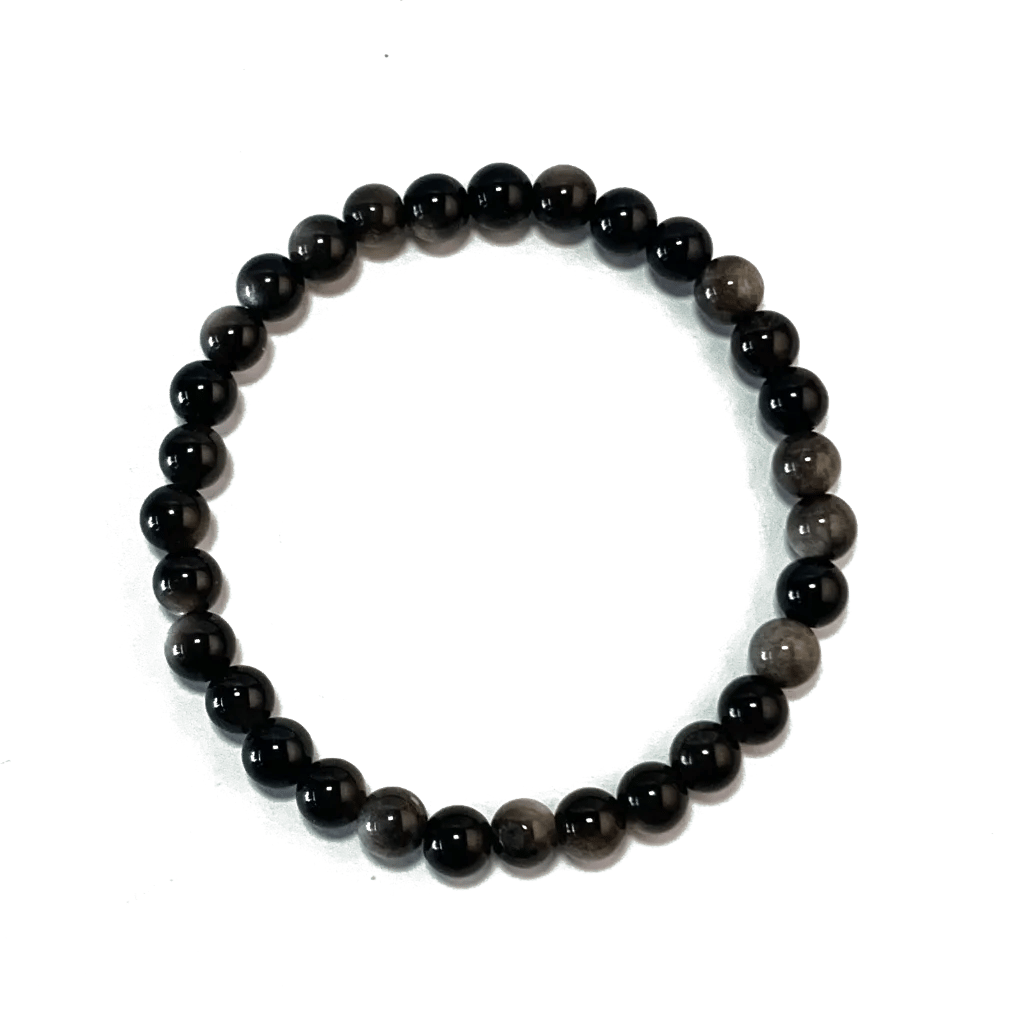
Our Obsidian Bracelet
6 mm or 8 mm natural obsidian beads on a durable stretch cord, sized to fit most wrists at about 7 in / 18 cm. Deep glassy black, Water element.