Short Answer: The Difference Is Banding
Red agate and carnelian are two textures of one mineral family. Both are chalcedony, both sit at 6.5 to 7 on the Mohs scale, both belong to Fire in the Five Elements, and both draw their color from iron oxide.
One thing separates them: banding.
Banded means red agate. Even means carnelian. Hold the stone to a strong light, turn it slowly, and stripes or concentric layers mean agate while color that runs uniform means carnelian.
This question earns its own article because the two stones sit next to each other on the shelf at similar prices, feel the same in the hand, and only separate at the moment you turn them.
What Is Red Agate?
Red agate is banded chalcedony, part of the microcrystalline quartz family. Its red comes from scattered iron oxide, and the color runs from deep brick red into dark red, usually with layered variation in depth.
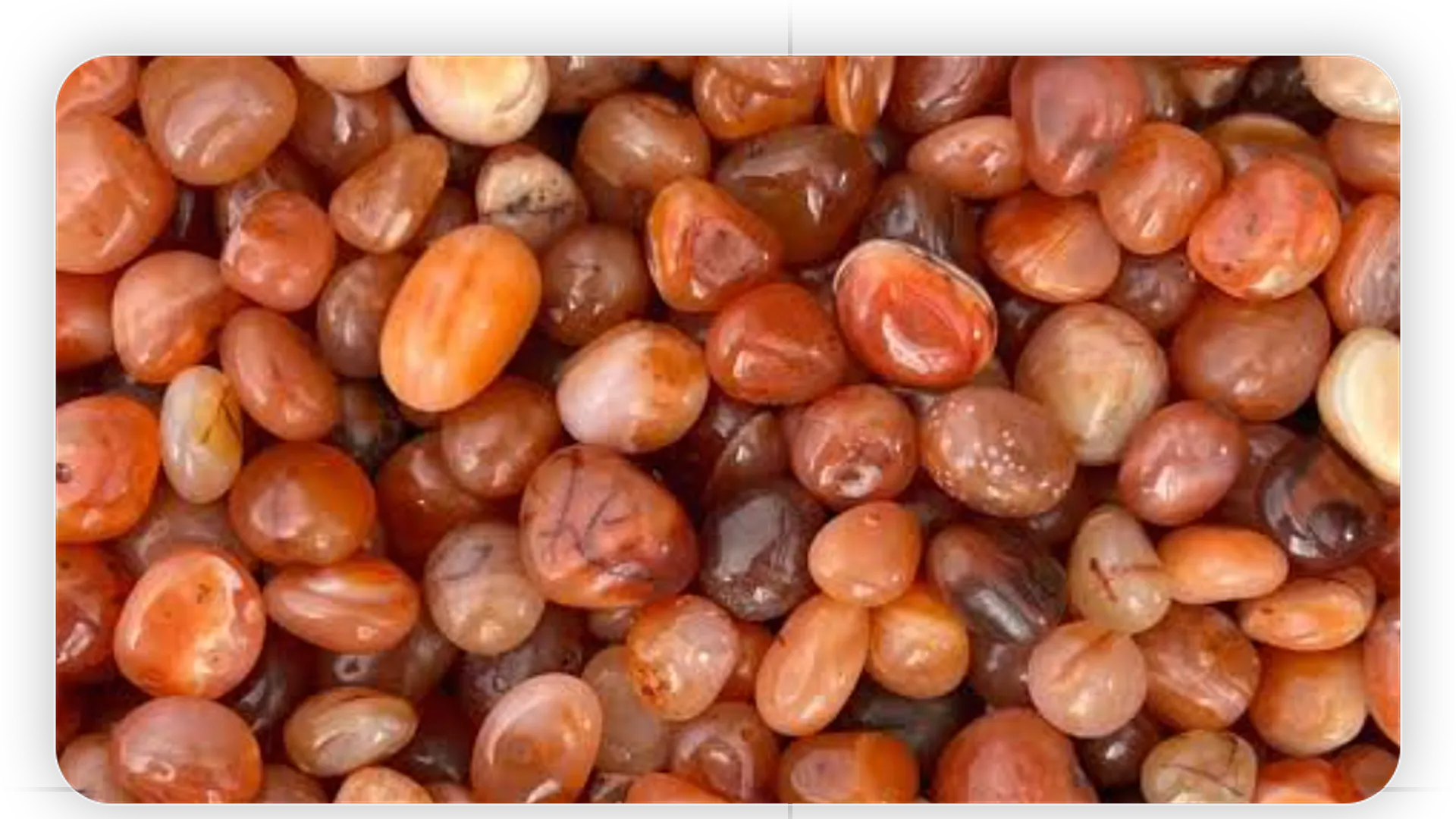
Its defining feature is the banding: turn the stone and you see stripes or concentric color layers, which is what makes an agate an agate within the chalcedony group. Thin edges can transmit light, and what comes through is a dark red or orange-red.
Its surface reads layered, with different depths of color across the bands on a single bead. That is the most immediate visual difference from carnelian.
In our store, red agate carries the name Stone of Inner Fire. It comes in 6 mm or 8 mm natural red agate beads, in deep layered red tones with natural banding and subtle variation from bead to bead.
What Is Carnelian?
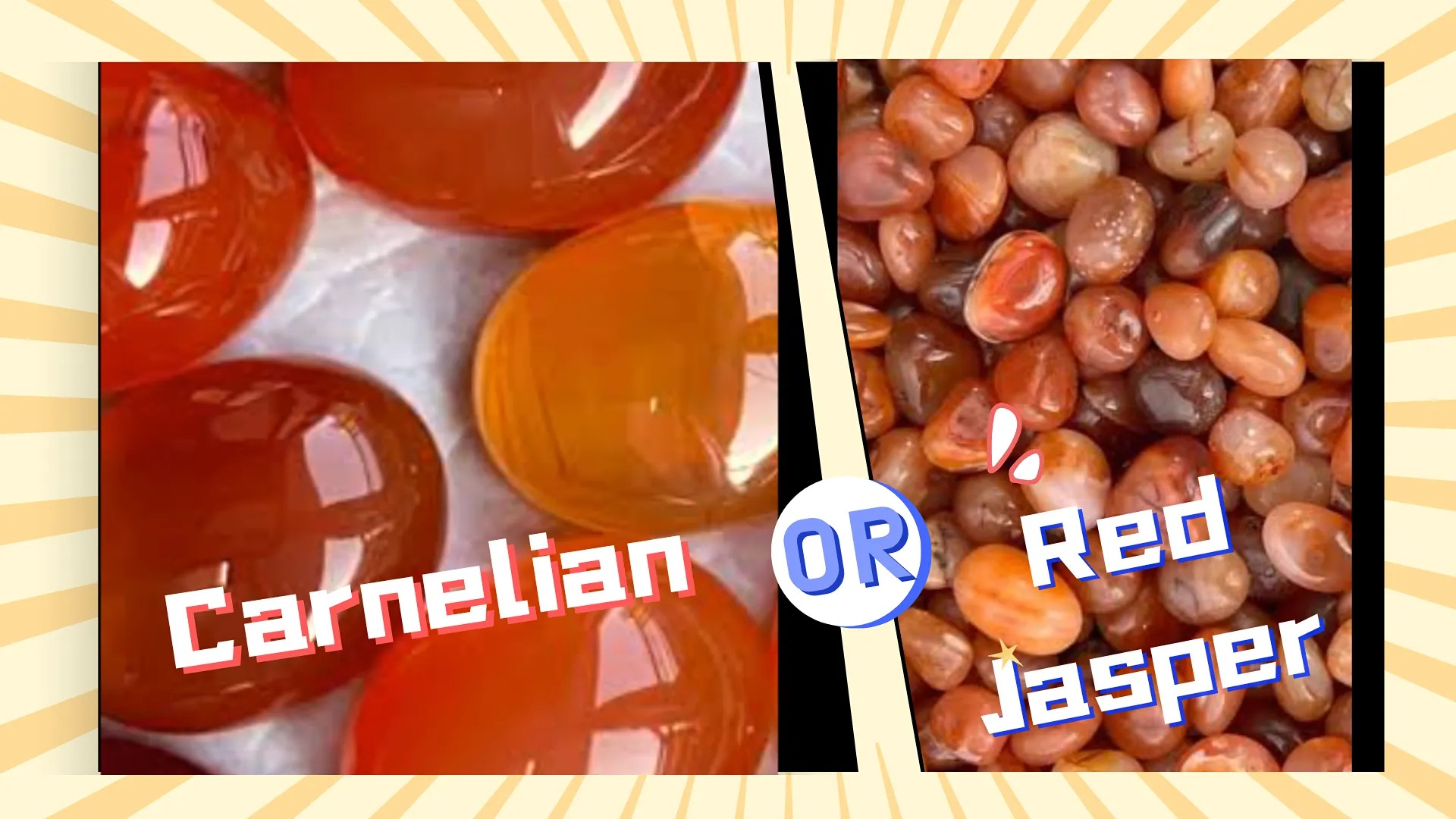
Carnelian is chalcedony without banding, from the same family and the same coloring elements. The difference is internal: no bands, with color running from pale yellow through orange and orange-red into deep red-brown, evenly across the stone.
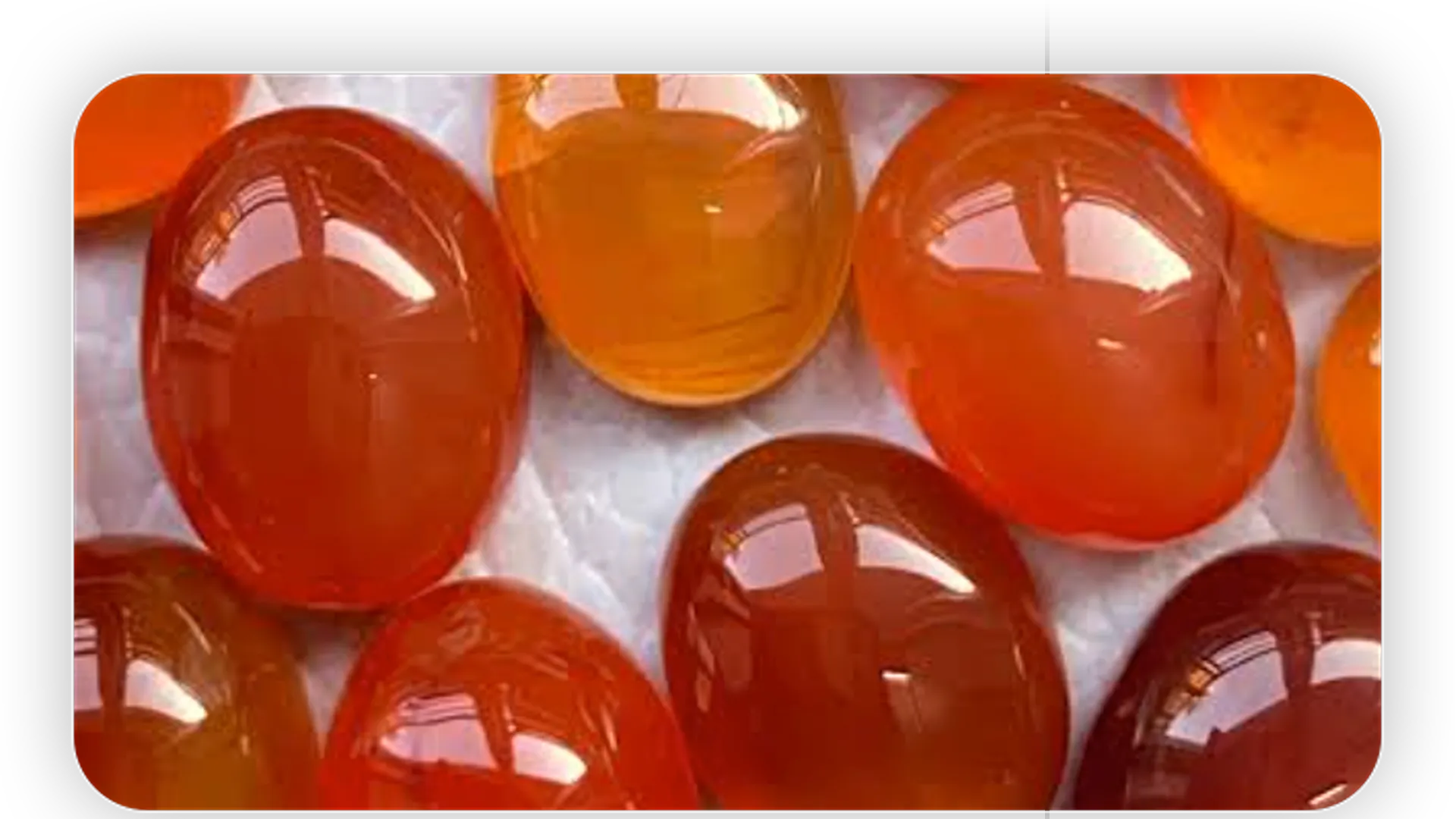
Because it holds fewer light-scattering inclusions than jasper, its thinner edges pass a soft orange glow. Its history runs through the ancient world, cut into seals and amulets in Egypt and Rome, and because it is hard enough to take a fine polish, it became one of the most common stones for intaglio carving and signet rings.
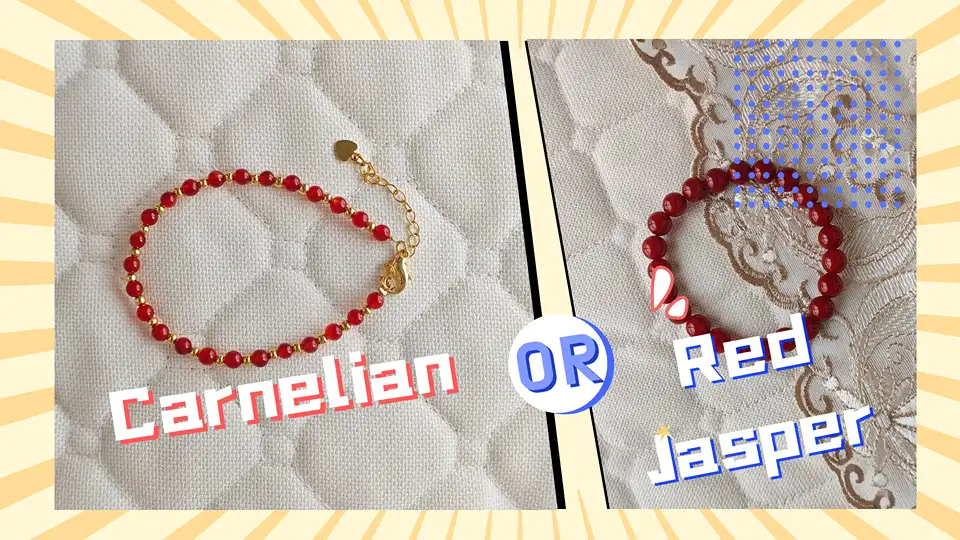
In our store, carnelian carries the name Stone of Expression. It comes in 4 mm natural carnelian beads with color-preserving gold accent beads, finished with a lobster clasp and extender chain.
Side by Side
Red Agate | Carnelian | |
What it is | Banded chalcedony | Chalcedony without banding |
Family | Microcrystalline quartz | Microcrystalline quartz |
Color source | Scattered iron oxide | Iron oxide, same family |
Banding | Yes, stripes or concentric layers | None, even color |
Transparency | Translucent at the edges | Translucent at the edges |
Color | Deep brick red to dark red, layered | Pale yellow, orange, orange-red, deep red-brown |
Surface | Layered, depth shifts across bands | Vitreous to waxy, brighter when polished |
Mohs hardness | 6.5 to 7 | 6.5 to 7 |
Specific gravity | Around 2.6 | Around 2.6 |
Five Elements | Fire | Fire |
Store name | Stone of Inner Fire | Stone of Expression |
Read the table from the top and one row does the work: banding. The two stones share a mineral family, a coloring element, a hardness range, and a specific gravity, and they share an element. They part ways on whether the interior carries bands.
Note the hardness row. Both sit at 6.5 to 7, so neither is harder than the other and no scratch test will separate them. Specific gravity is nearly identical too, so weighing them will not help either. That is not a coincidence: they are two textures of the same mineral.
How to Tell Them Apart: One Test Is Enough
Look for banding. This is the only reliable test. Hold the bead or rough stone to a strong light, and a phone flashlight is enough, and turn it slowly. Stripes, color layers, or concentric rings mean red agate. Color that runs uniform with no bands means carnelian.
Two supporting signals. First, tone: red agate leans deeper, darker, more brick red, while carnelian leans brighter, warmer, more orange. Second, texture: red agate reads layered with different depths across the stone, while carnelian reads even and consistent.
One honest caveat. Deep-colored carnelian can show so little color variation that it looks uniform at a glance, and a lightly banded red agate can hide its bands in weak light. If banding matters to you, turn the stone under strong light once more, and if it still will not resolve, ask the seller directly. Any vendor should be able to say whether a stone carries bands and whether it has been treated.
One common confusion. In traditional naming, carnelian is itself often called red agate, and the two names have been used interchangeably in the gem trade for centuries. Strictly speaking, the definition of agate includes banding, so an even red chalcedony with no bands should be called carnelian. The overlap lives in the naming more than in the stone. We cover that naming history in detail here: Is Carnelian an Agate? Carnelian vs Red Jasper.
Energy and Intention: The Fire That Burns Covered vs. the Fire That Burns Open
In the Five Elements framework, red agate and carnelian both belong to Fire. So the useful question is not which one carries fire, but how each one burns.
Red agate is the fire that burns inward. In our store it is Stone of Inner Fire, traditionally associated with vitality, inner warmth, and heat that lasts. Its fire does not rush outward. It holds, like a bed of coals that burns long and low.
Carnelian is the fire that burns outward. In our store it is Stone of Expression, traditionally associated with motivation, confidence, and the willingness to speak. Its fire points outward, toward starting, saying, and being seen.
One way to hold it: red agate is the fire that burns covered, and carnelian is the fire that burns open.
If you are not sure which element fits you, our Element Quiz takes about a minute.
Which One Should You Choose?
Choose red agate if you want layered texture and a deeper tone. It shows banding when you turn it, its color runs darker and more brick, and it wears more quietly than carnelian. It suits anyone who wants some variation and does not need brightness. Red Agate bracelet
Choose carnelian if you want an even warm orange and more brightness. Its color is uniform, its edges glow, and it takes a brighter polish, which makes it read warmer and more outward-facing. It suits anyone who wants a brighter orange. Carnelian bracelet
Wearing both is reasonable too. Both are Fire, and the two intentions are not in conflict: a long stretch needs both the covered fire and the open one. Set side by side, the banding difference also becomes easier to see, which makes the pair read as layered rather than repeated.
There is a third stone in the red family: red jasper. What separates it from these two is opacity, since it blocks light even at its thinnest edge. For that comparison, see Red Jasper vs Red Agate.
Our Red Agate and Carnelian Bracelets
Red Agate Bracelet: 6 mm or 8 mm natural red agate beads on a durable stretch cord, sized to fit most wrists at about 7 in / 18 cm. Deep layered red tones with natural banding. Stone of Inner Fire.
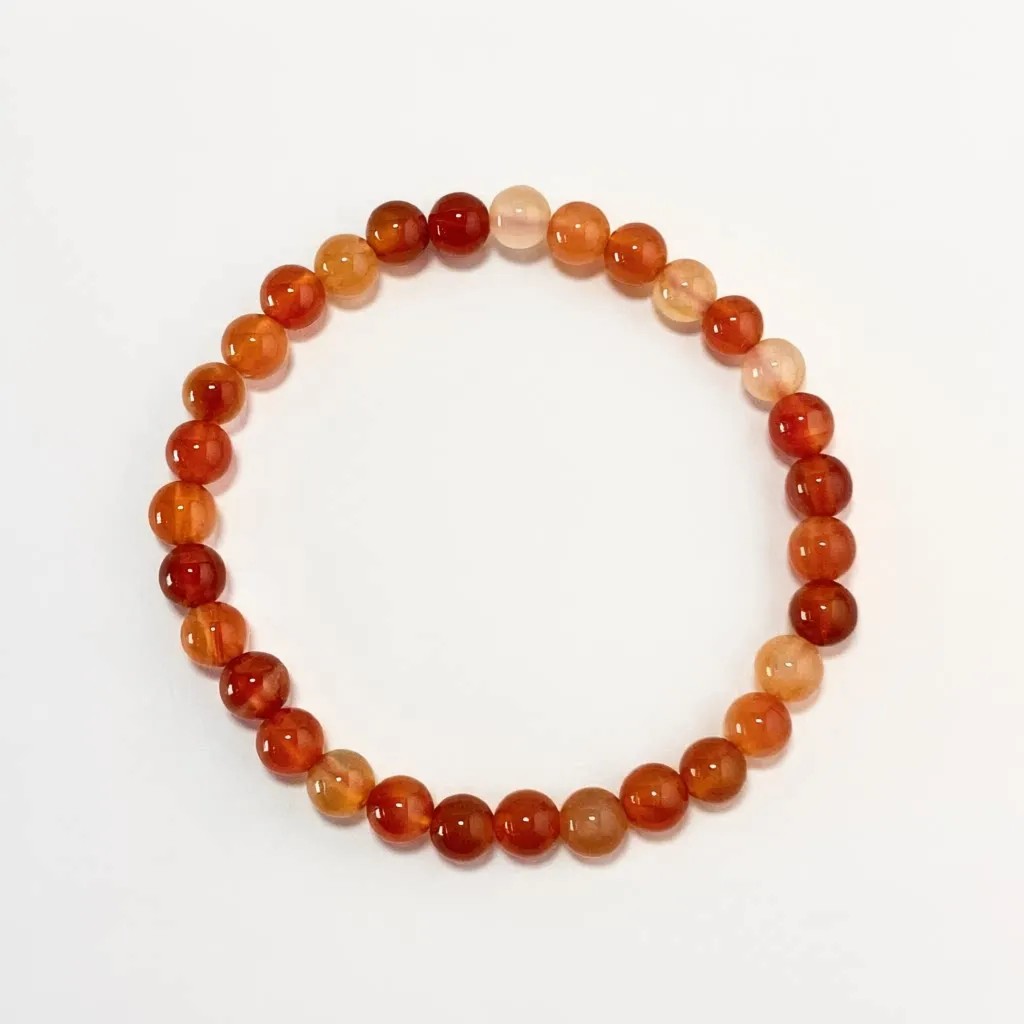
Carnelian Bracelet: 4 mm natural carnelian beads with color-preserving gold accent beads, finished with an adjustable lobster clasp and extender chain (approx. 6–7.5 in / 15–19 cm). Warm orange-red tones that glow at the edges. Stone of Expression.