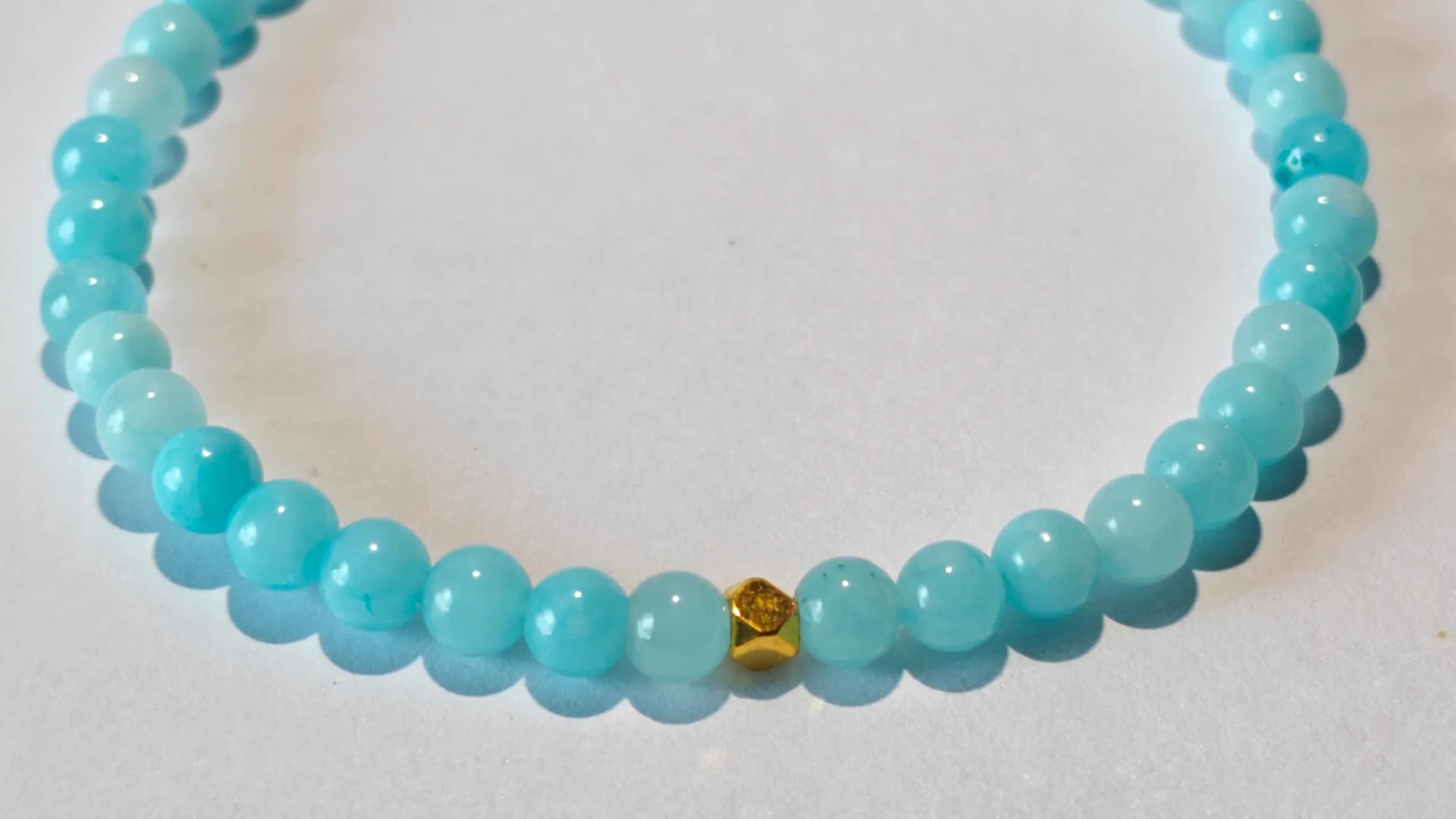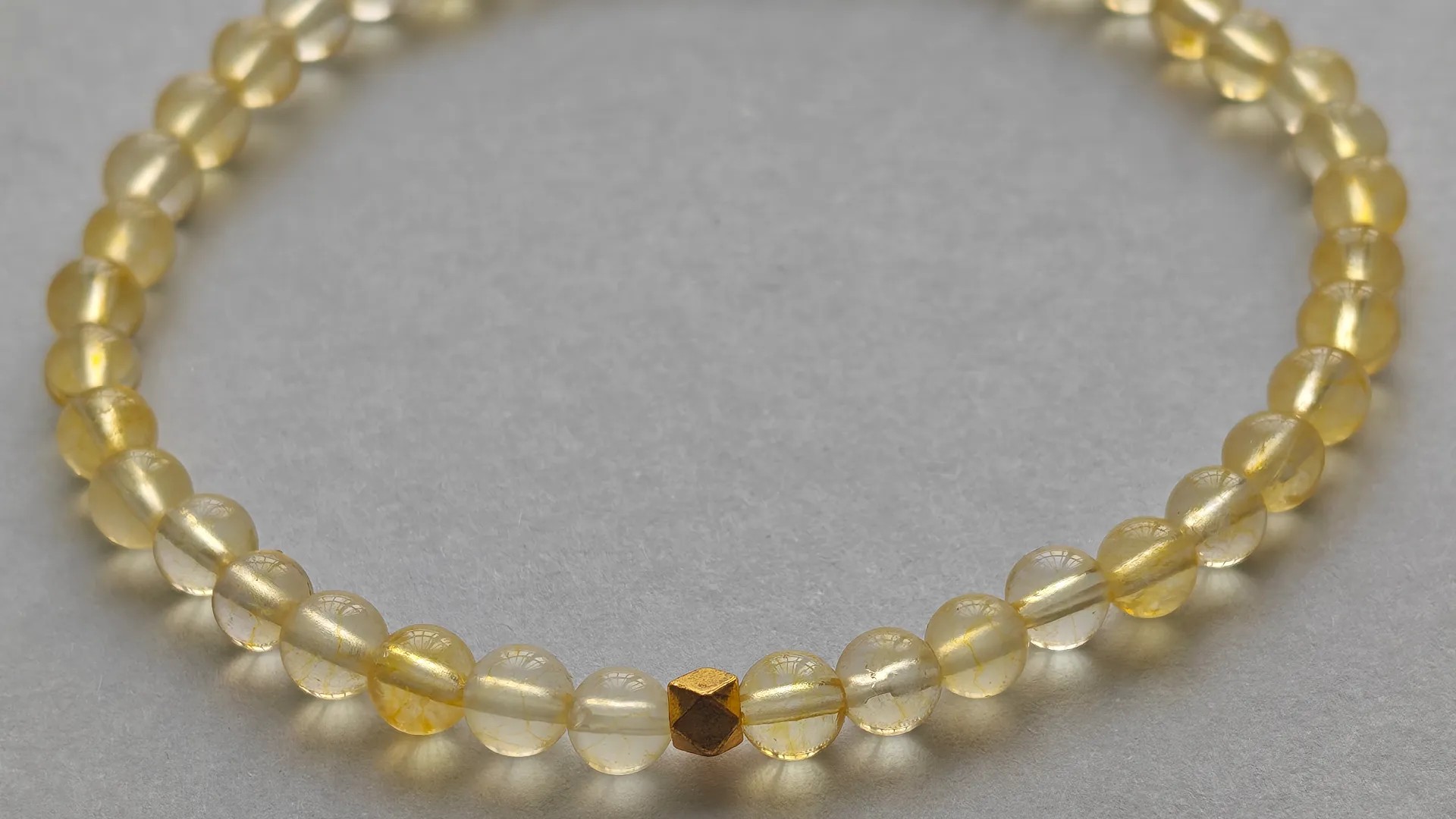
Short answer: They have been mixed up for centuries, but they are completely different minerals. Topaz is an aluminum silicate: Mohs 8, perfect cleavage, and noticeably heavier than citrine at the same size. Citrine is quartz: Mohs 7, no cleavage, and yellow to orange-brown and nothing else. The fastest field check is weight: topaz runs about a quarter to a third heavier. The cleaner check is color: citrine is only ever golden, so any blue or pink "citrine" is topaz by definition.
What Is Citrine?
Citrine is the yellow variety of quartz (SiO₂), colored by iron in the crystal lattice. It sits at 7 on the Mohs scale, has a specific gravity around 2.65, no cleavage, and a conchoidal fracture. Its color runs from pale lemon through honey-gold to deep orange-brown. That is the whole palette.
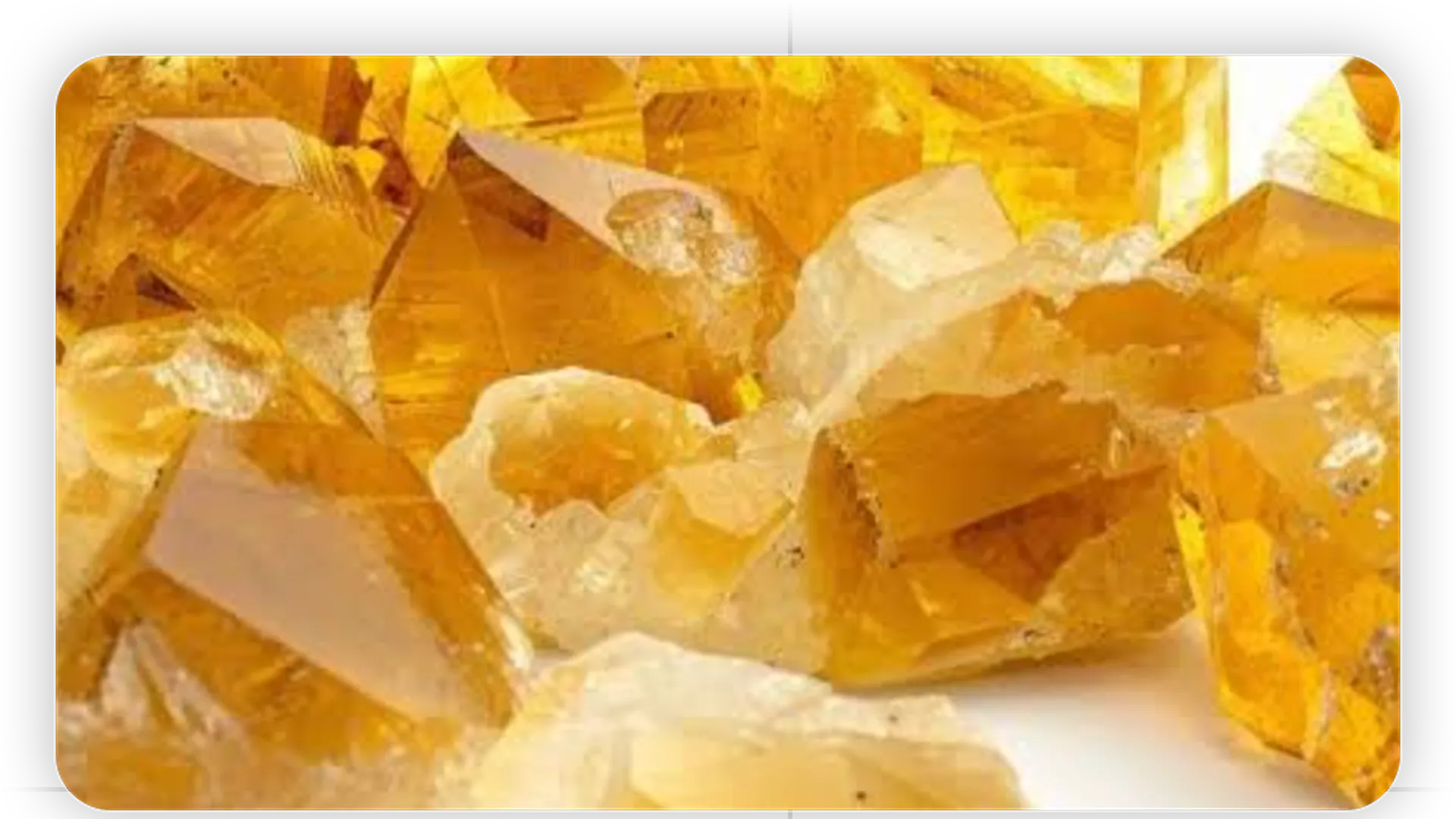
One thing worth knowing: natural citrine is rare, and most citrine on the market is heat-treated amethyst. The full set of checks lives in Natural Citrine vs Heat-Treated Amethyst.
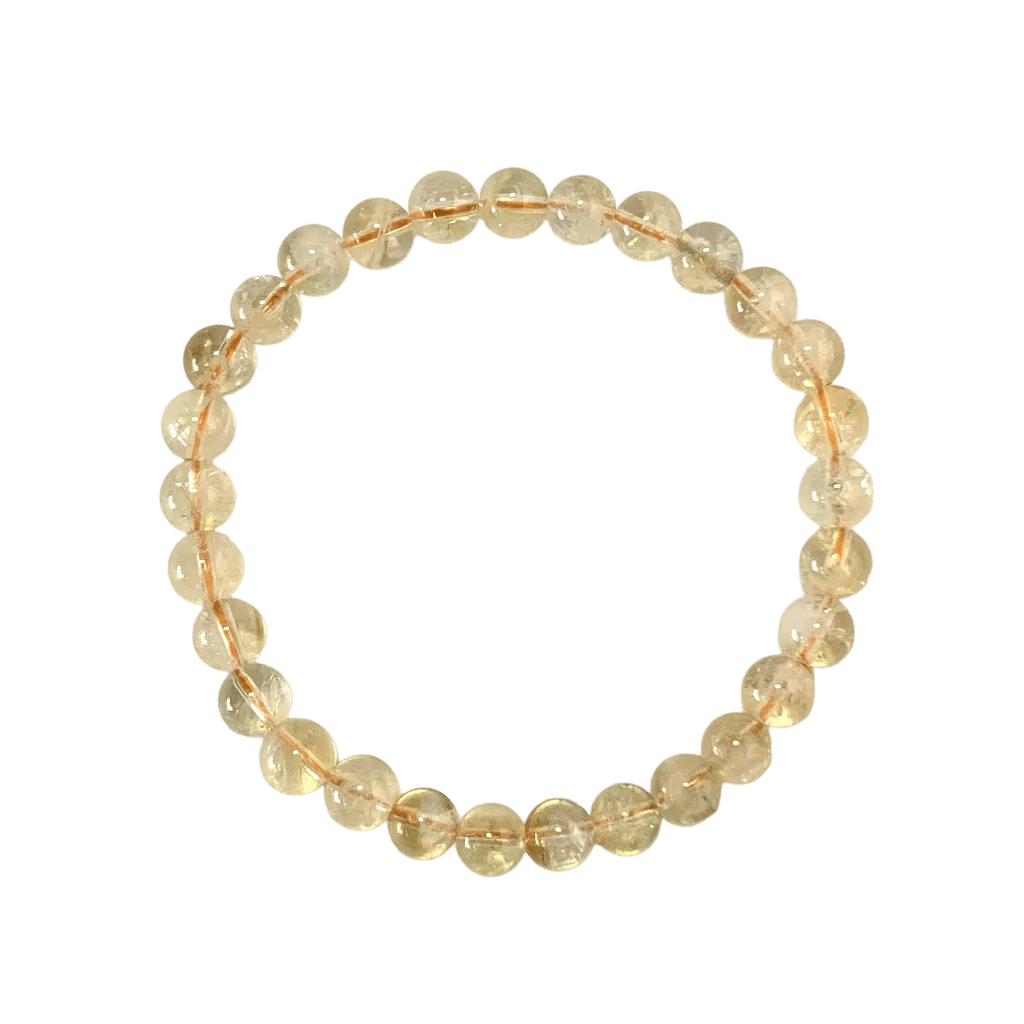
We carry two: a 4 mm citrine bracelet and a 6 mm pyramid citrine bracelet, both honey-gold to amber on a stretch cord.
What Is Topaz?
Topaz (Al₂SiO₄(F,OH)₂) is a fluorine-bearing aluminum silicate at Mohs 8, among the hardest silicates there are. It crystallizes in the orthorhombic system and carries one critical feature: perfect basal cleavage: a sharp blow along a flat internal plane of weakness will split it.
Its specific gravity runs 3.49 to 3.57, which makes it noticeably denser than citrine at the same size. Refractive index is 1.619 to 1.627 against citrine's 1.544 to 1.553, so a well-cut topaz is brighter and carries more fire.
The color range is enormous: colorless, blue, yellow, orange, pink, violet, brown. Natural yellow topaz is uncommon; most blue topaz on the market (Swiss Blue, London Blue, Sky Blue) starts colorless and is irradiated and heated into blue. This is standard industry practice, color-stable, but it must be disclosed. The most valuable variety is imperial topaz, a golden-orange body with pink or peach undertones.
Side by Side
Property | Citrine | Topaz |
Chemistry | SiO₂, quartz | Al₂SiO₄(F,OH)₂, aluminum silicate |
Crystal system | Trigonal (hexagonal) | Orthorhombic |
Mohs hardness | 7 | 8 |
Cleavage | None, conchoidal fracture | Perfect basal cleavage |
Specific gravity | ~2.65 | 3.49 to 3.57 |
Refractive index | 1.544 to 1.553 | 1.619 to 1.627 |
Color range | Yellow to orange-brown only | Colorless, blue, yellow, orange, pink, violet, brown |
Common treatment | Mostly heat-treated amethyst | Blue usually irradiated |
Daily weak point | Slow fading in strong sun | Splits along cleavage on impact; no ultrasonic |
How to Tell Them Apart
Check 1: Heft it. At the same size, topaz feels about a quarter to a third heavier: the gap between 3.5 and 2.66 in specific gravity is something the hand notices. This works best on faceted stones and cabochons. On 4 mm beads the single-stone difference is diluted by size tolerance and cord weight, but hold a handful of each at the same size and you will still feel it.
Check 2: Read the color range. Citrine is yellow to orange-brown, always. If a "citrine" is blue, pink, violet, or colorless, it is topaz. This check costs nothing and never fails.
Check 3: Look for fire. The refractive index gap makes a well-cut topaz brighter than citrine. This one is subjective, so treat it as supporting evidence only.
Do not run a scratch test. Hardness 8 against 7 will damage whichever stone you pick as the scraper, and a scratch on a polished bead is permanent. The hardness gap is a mineralogical fact, not a home test.
Why They Share November
Before modern mineralogy, almost any transparent yellow stone was called topaz. Citrine spent a long time trading under names like "gold topaz," "Spanish topaz," and "Madeira topaz," borrowing topaz's prestige. Topaz is the traditional November birthstone; in 1952 citrine was officially added as the more accessible alternative.
Two stones sharing one birth month is the legacy of centuries of misidentification, not mineralogical kinship.
Energy and Intention: The Merchant's Stone vs. the Stone of Strength
Citrine's best-known association is abundance: the "merchant's stone" label is mostly a twentieth-century coinage, and the older thread is warmth, steadiness, and light held through the day. Topaz carries the traditional notes of strength, honor, and wisdom, with roots in ancient Greece.
Which One Should You Choose?
Here is the counterintuitive ending: hardness 8 does not make topaz more durable than hardness 7. Topaz has perfect cleavage, and one hard knock can split it. Citrine has no cleavage and takes everyday knocks better. Hardness measures scratch resistance; cleavage is the soft spot for cracking.
For daily durability, choose citrine. For fire and rarity, choose topaz. What we sell is citrine, in two sizes. Topaz we do not carry.
If you are unsure which element fits you, start with our Element Quiz.
Our Citrine Bracelets
Citrine Bracelet: 4 mm natural citrine beads on a durable elastic cord, sized to fit most wrists at about 7 in / 18 cm. Warm honey-gold to amber tones with natural variation from bead to bead. Earth in the Five Elements.
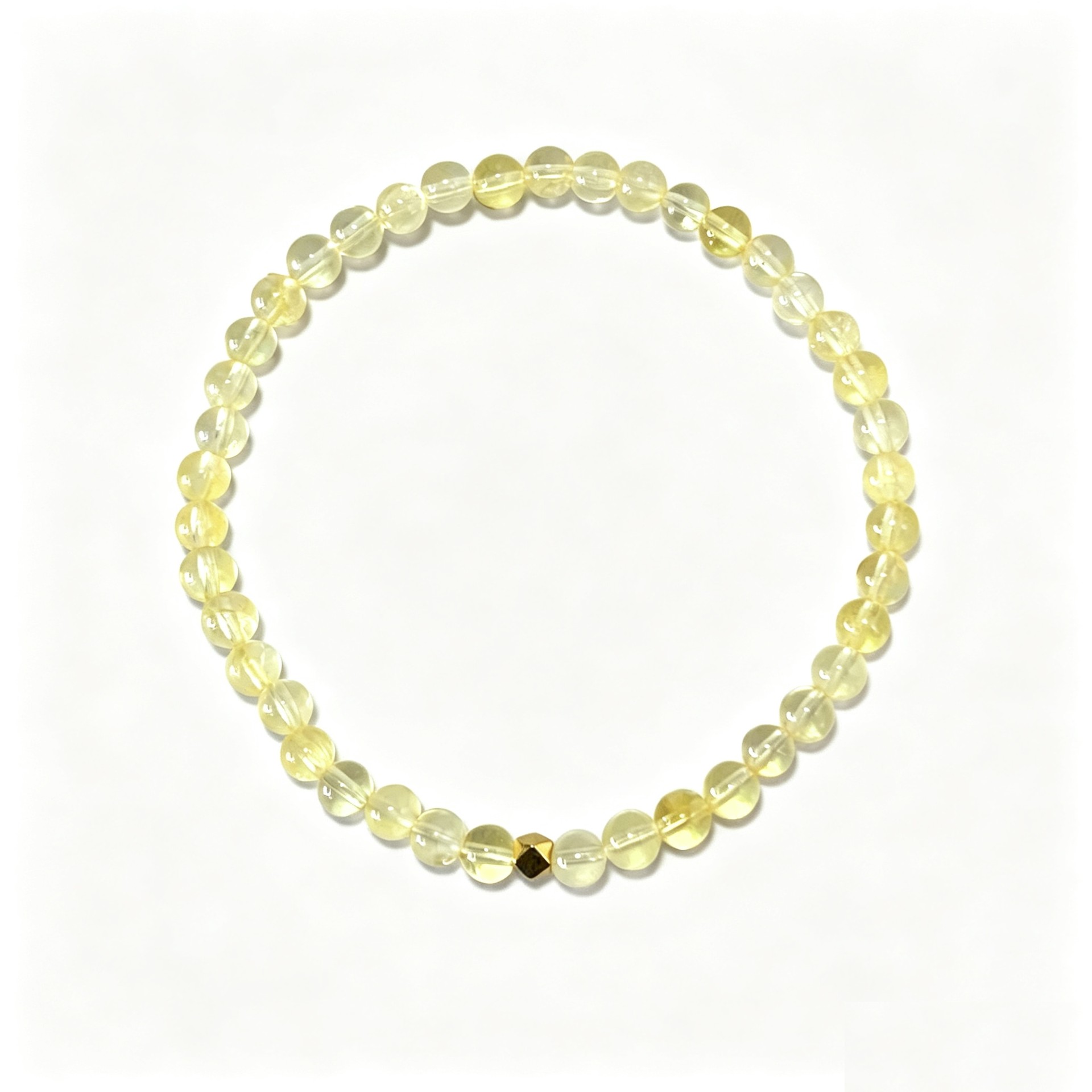
Pyramid Citrine Bracelet: 6 mm natural citrine beads on a durable elastic cord, sized to fit most wrists at about 7 in / 18 cm. Warm honey-gold to amber tones with natural variation from bead to bead.
For blue topaz specifically, see our sister post Aquamarine vs Blue Topaz vs Turquoise. For where citrine's own color comes from, see Citrine vs Heat-Treated Amethyst.