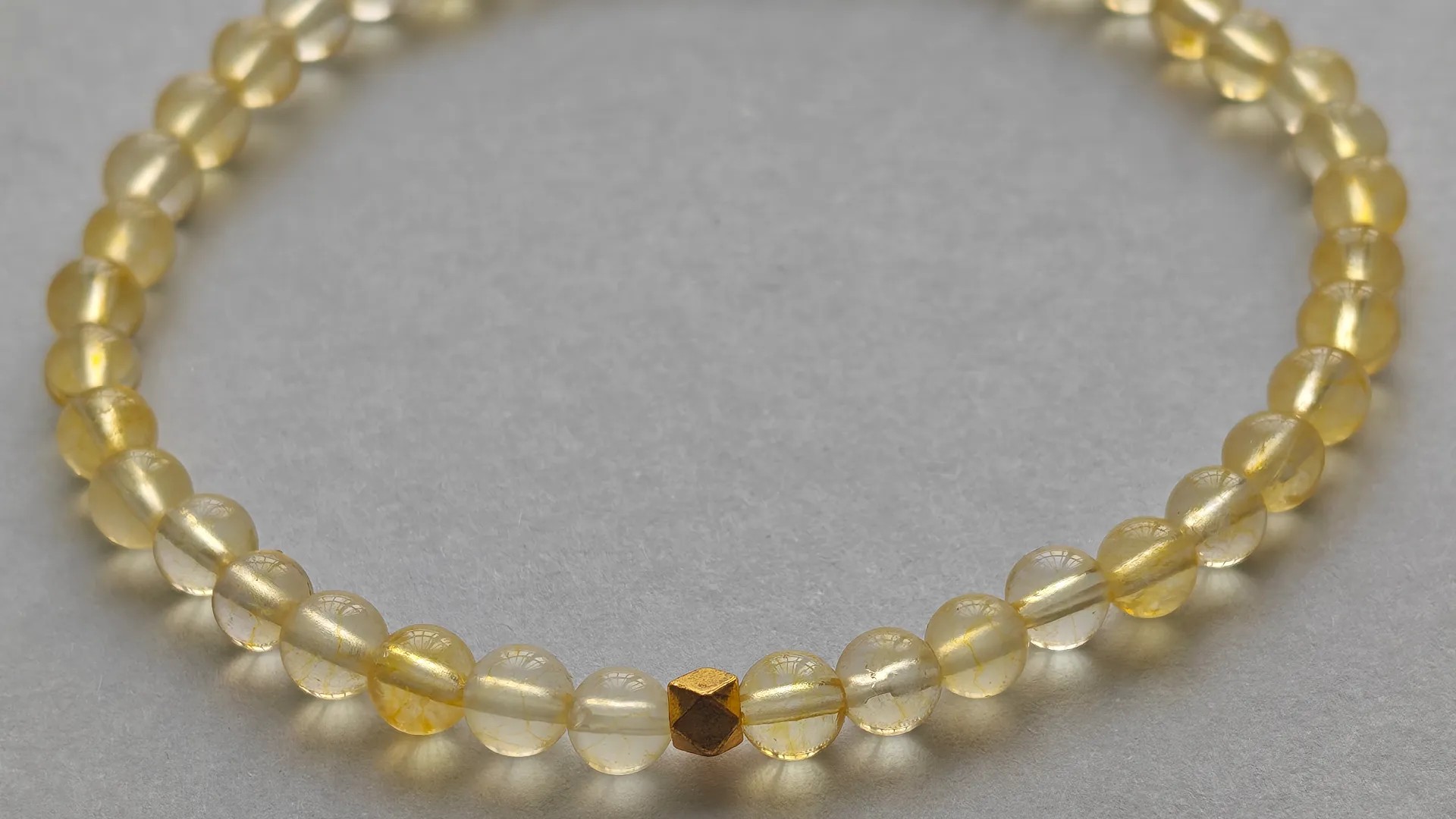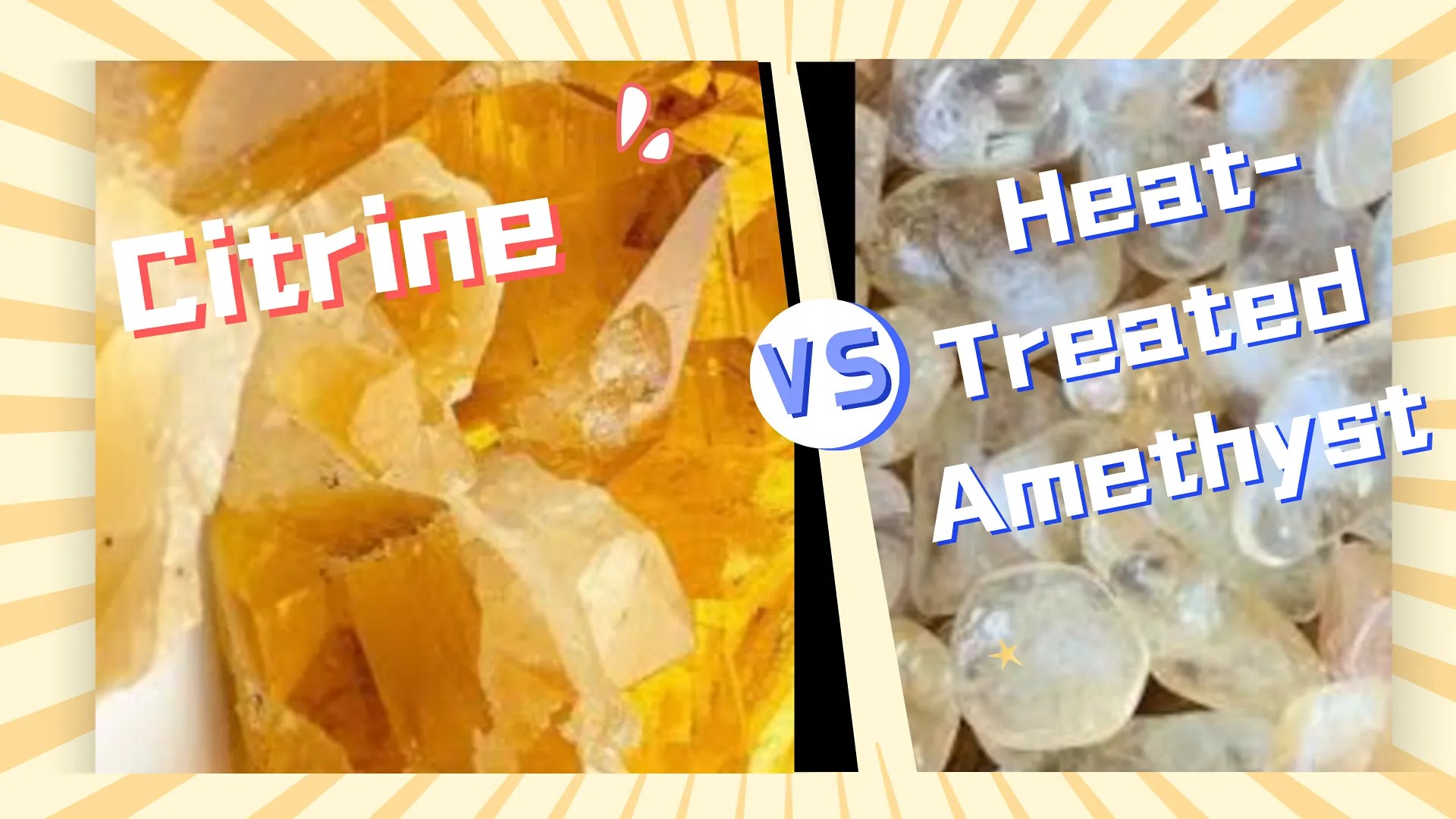
Short answer: They are the same mineral. Both are quartz, both share the same chemistry, and both sit at 7 on the Mohs scale. On your wrist they are almost impossible to tell apart. The only real difference is thermal history. Natural citrine gets its color underground, under conditions uncommon enough to make it genuinely rare. Most of what sells as "citrine" started as amethyst and spent a few hours in a kiln. That is not fraud. Heat treatment is stable, permanent, and industry standard. The problem is selling it as natural. For a bracelet, the two wear identically. What you should be asking is not which stone is better, but whether the seller told you where the color came from.
What Is Natural Citrine?
Citrine is the yellow variety of quartz (SiO₂), colored by trace iron held in a particular state inside the crystal lattice. Natural citrine needs fairly specific geology: iron that stayed in the ferric state during formation instead of being converted by radiation. That is what makes it a genuinely rare member of the quartz family. Main sources include Madagascar, Russia, and the Congo; Bolivia's Anahí mine is known for ametrine, the purple-and-yellow bicolor.
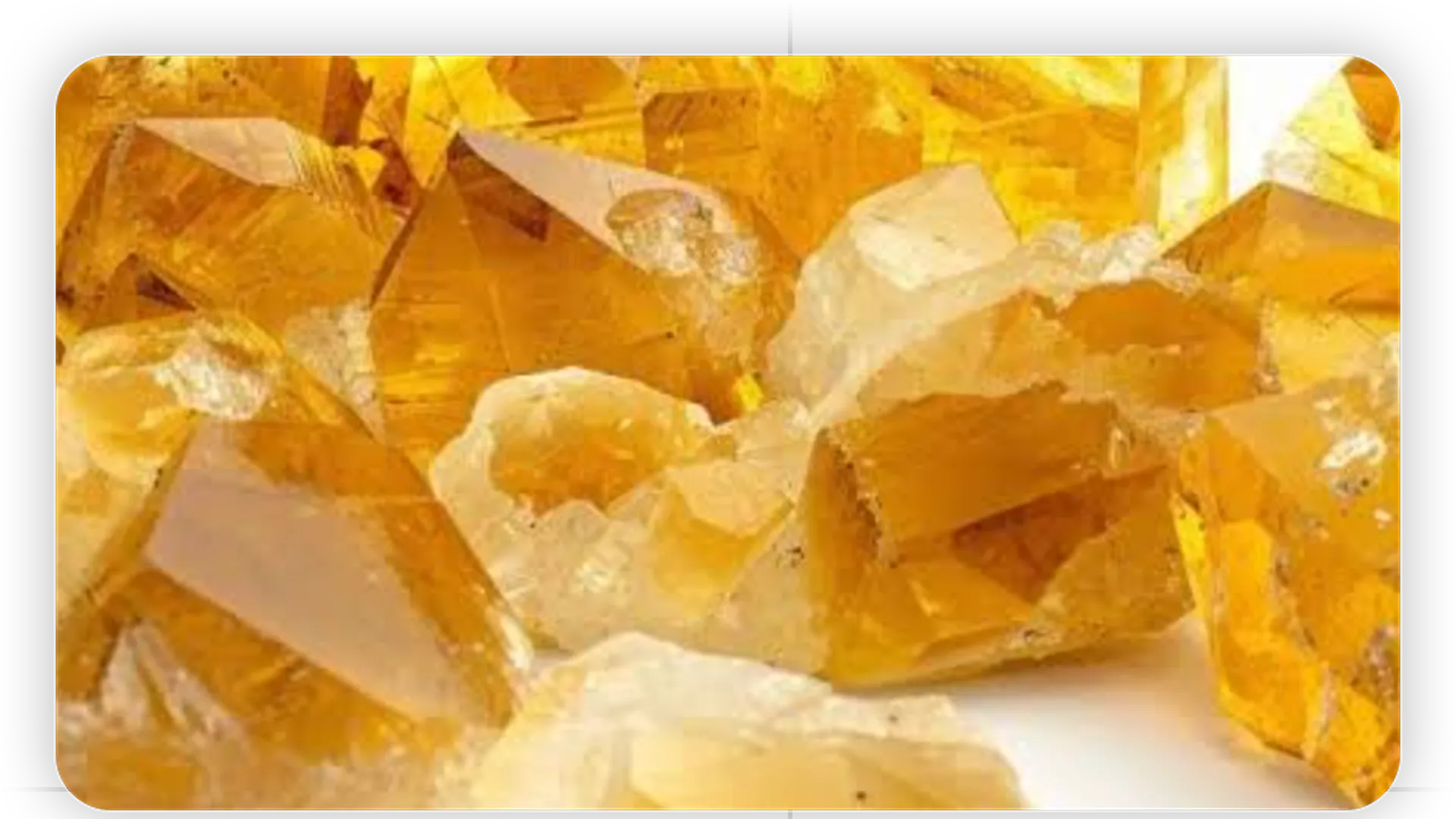
Color runs from pale lemon through honey-gold to the deep orange-brown the trade calls Madeira. It sits at 7 on the Mohs scale, has no cleavage, and breaks conchoidally. Like all quartz, it fades slowly under long exposure to strong direct light.
What Is Heat-Treated Amethyst?
Put amethyst in a kiln at around 470°C or above for a few hours and the iron in the lattice is reduced, the purple collapses, and yellow takes its place. Push to 550 to 560°C and you get the deeper Madeira orange-brown. The change is irreversible. Reheating will not bring the purple back, and the resulting color is stable.
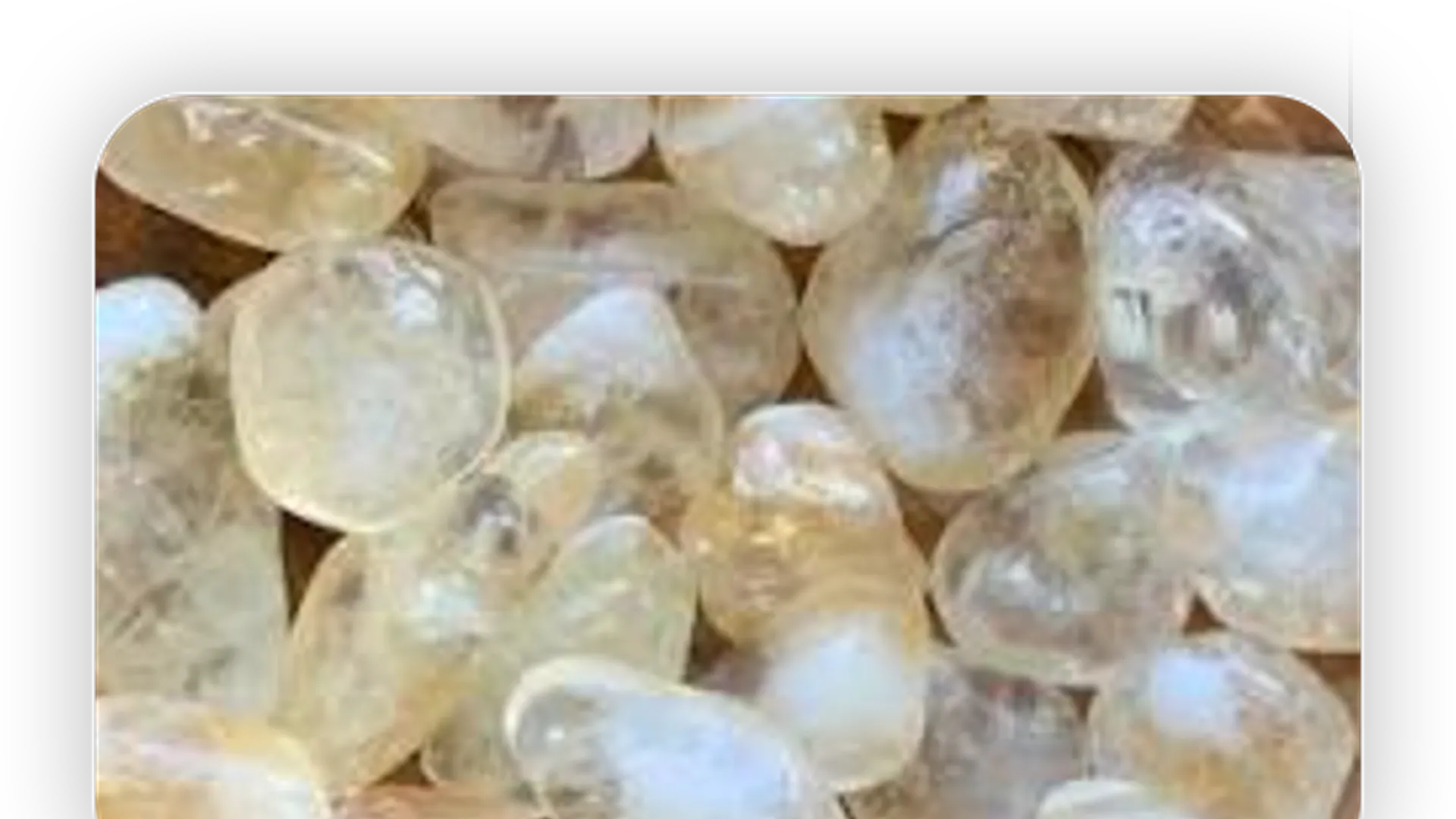
The industry runs on Brazil: large amethyst geodes are baked in bulk, then cut into beads, supplying most of the "citrine" in circulation. Mineralogically, what comes out is the same stone as natural citrine: quartz, hardness 7, specific gravity around 2.65.
Side by Side
Property | Natural citrine | Heat-treated amethyst (most "citrine" on sale) |
Chemistry | SiO₂ | SiO₂ |
Mineral family | Quartz | Quartz |
Mohs hardness | 7 | 7 |
Crystal system | Trigonal (hexagonal) | Trigonal (hexagonal) |
Cleavage | None, conchoidal fracture | None, conchoidal fracture |
Specific gravity | ~2.65 | ~2.65 |
Color | Pale lemon to honey, softer tone | Saturated gold to orange-brown, often uneven |
Typical origin | Madagascar, Russia, Congo | Brazil, from amethyst geodes |
Geode form | Does not occur | Common; most "citrine geodes" are this |
Supply | Rare | The overwhelming majority |
How to Tell Them Apart
Three field checks, each with a stated limit. The limits come first:
Check 1: Read the color for over-saturation. Heated material often carries a very saturated gold-orange, and it is uneven within one piece: deep at the tips, whitish or clear near the base. That gradient is the ghost of the original amethyst's color zones. Natural citrine tends to run softer and more even. On 4 mm polished beads this check loses most of its power, because polishing averages the color out.
Check 2: Look for ghost zoning. Hold the stone to a strong light and turn it slowly. Faint purple-gray wisps, fans, or angular bands left over from the amethyst's growth pattern are the memory of the stone's previous life. Natural citrine has no such history.
Check 3: Rule out by form. Anything sold as a "citrine geode" or "citrine cluster" is almost certainly a baked amethyst geode. Natural citrine does not form geodes or clusters.
One supporting anchor: price. Natural citrine runs an order of magnitude above heated material per carat. If "natural citrine" is priced like amethyst, either it is heated or the seller has not checked what they are selling. Ask.
The dichroism test you may read about (natural citrine shows a faint color shift as you turn it, and heated material does not) only works on faceted stones and rough. Polished beads show nothing. Do not waste an evening on it.
Is Heat Treatment a Dealbreaker?
No. Heat treatment is stable, permanent, and standard practice, and the result is real quartz: not a simulant, not coated, not composite. The single problem is disclosure. Selling heated material as natural, at natural prices, is where the trade goes wrong.
For a bracelet buyer, the distinction does not even affect durability: hardness, specific gravity, and cleavage are identical, so the two wear the same. It affects what you pay and what you are told. Our advice: before buying any citrine, ask directly: "Is this natural or heat-treated?" A compliant seller can answer, and is willing to, because disclosure is the baseline of the gem trade, not a bonus.
This article makes no claim about the thermal history of any specific product. The checks above are for judging your own stones.
Energy and Intention: The Earth That Holds vs. the Water That Settles
In the Five Elements framework, citrine belongs to Earth: it is associated with abundance, grounding, and the feeling of being held. Amethyst belongs to Water: associated with calm, clarity, and flow. Mineralogically the two stones are close relatives; in the elements they sit in different places, which is a rare combination in our own storytelling.
Using our house language: citrine carries the Earth notes of abundance and grounding; amethyst carries the Water notes of calm and clarity. For something steadier and warmer in daily wear, choose citrine. For something that settles and clears, choose amethyst.
Which One Should You Choose?
For wear: no difference. Every physical property is identical.
For rarity: natural citrine is uncommon and priced accordingly; heated material is affordable and stable. The question is whether you want to pay for the rarity story.
For the elements: Earth steadiness points to citrine, Water stillness points to amethyst.
If you are unsure which element fits you, start with our Element Quiz.
Our Citrine and Amethyst Bracelets
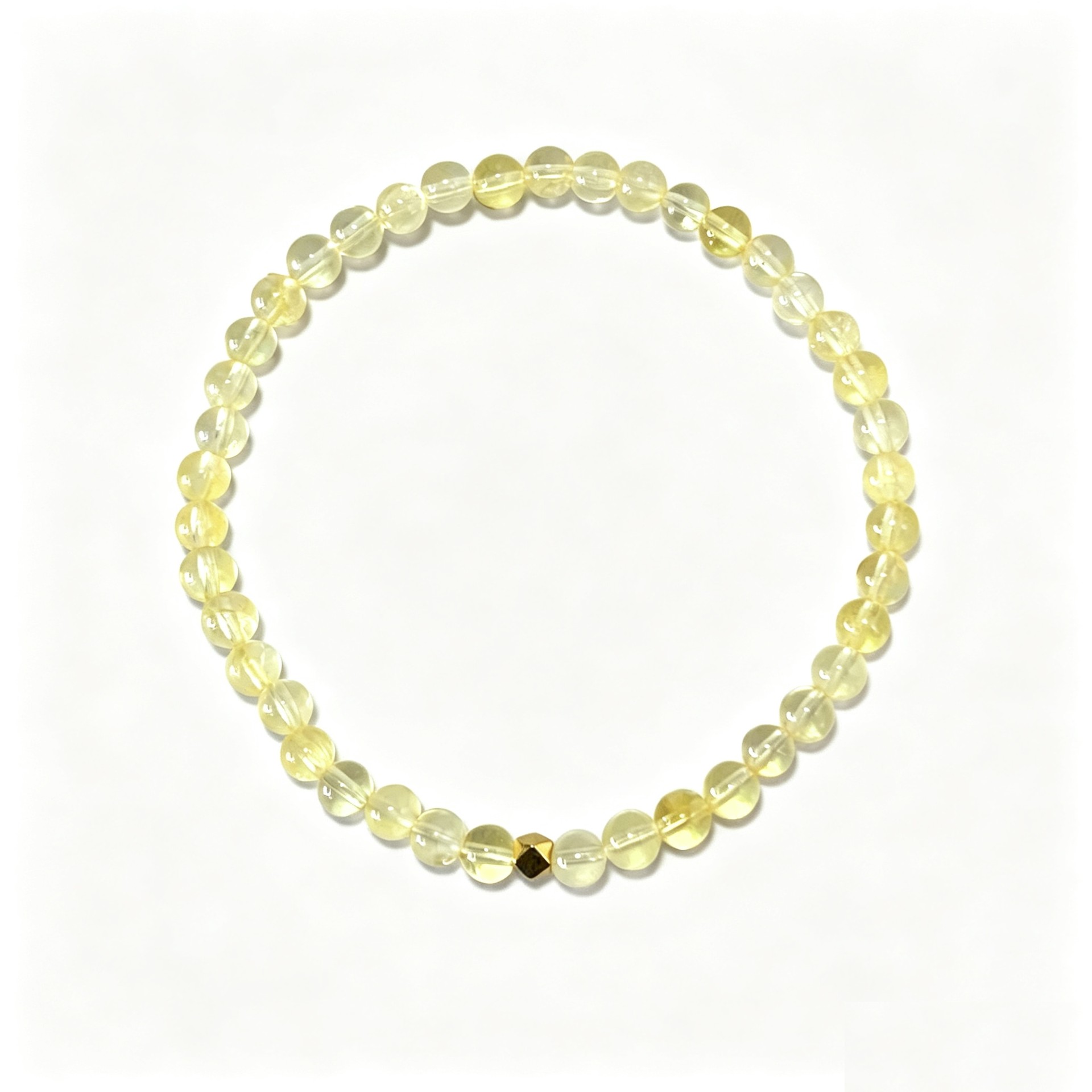
Citrine Bracelet: 4 mm natural citrine beads on a durable elastic cord, sized to fit most wrists at about 7 in / 18 cm. Warm honey-gold to amber tones with natural variation from bead to bead. Earth.
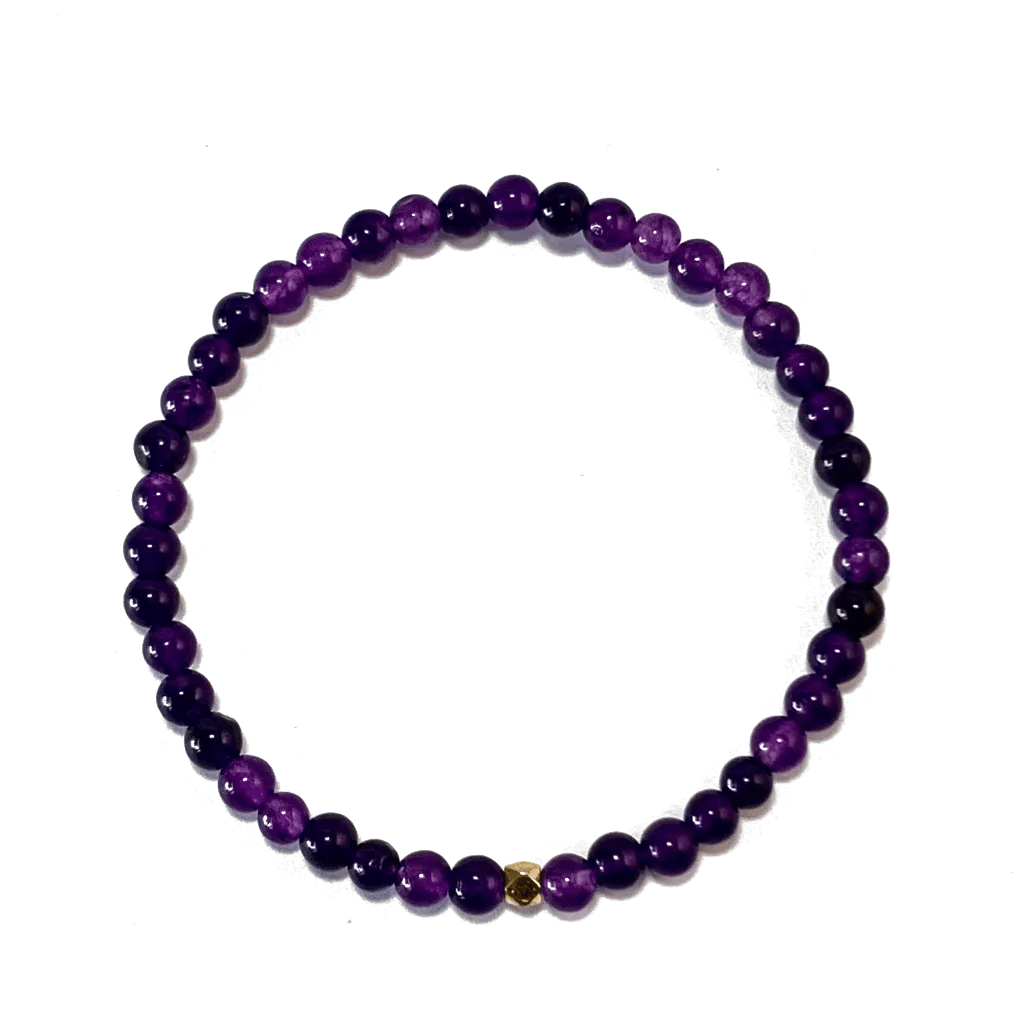
Amethyst Bracelet: 4 mm or 8 mm natural amethyst beads on a durable elastic cord, sized to fit most wrists at about 7 in / 18 cm. Natural purple tones from soft lilac to deeper violet, with subtle variation from bead to bead. Water.
A third option, 6 mm, is also in stock: the Pyramid Citrine Bracelet, honey-gold to amber on a stretch cord.
For care, our guide on how to cleanse and charge a crystal bracelet applies to both: keep citrine and amethyst out of long strong light, and neither likes a long soak.