Short Answer
March has two birthstones. On modern lists the answer is aquamarine. On traditional lists it is bloodstone. One is a beryl crystal that grows visible six-sided prisms at 7.5 to 8 on the Mohs scale. The other is chalcedony that grows no crystal faces at all, at 6.5 to 7. Their colors are opposites too: aquamarine runs pale blue to blue-green, and bloodstone is dark green with red spots. Half the people searching "March birthstone" are looking for aquamarine and half are looking for bloodstone, and this article covers both. If this is your first crystal bracelet, start with What Are Crystal Bracelets?.
What Is the March Birthstone?
Modern birthstone lists answer March with aquamarine. Traditional lists answer March with bloodstone. Both count, depending on which table you are reading.
The modern list traces back to 1912, when an American jewelers' organization standardized one stone per month, and aquamarine has represented March ever since. Bloodstone is older. In earlier traditions March already belonged to it, and the red dots on its dark green surface were read as something special, before a prettier, easier-to-source blue stone pushed it to the margins.
So "what is the March birthstone" has no single answer. The correct response is a question back: which list do you mean. If you are buying for someone who values the older tradition, bloodstone is the stone with history behind it. If you are following today's default answer in shops and gift guides, aquamarine is the March stone.
The Two March Birthstones, Side by Side
Aquamarine | Bloodstone | |
Mineral family | Beryl | A variety of chalcedony |
Chemistry | Beryllium aluminum silicate | SiO₂ |
Crystal structure | Hexagonal, grows six-sided prisms | Cryptocrystalline, no visible crystal form |
Mohs hardness | 7.5 to 8 | 6.5 to 7 |
Specific gravity | 2.68 to 2.74 | Around 2.61 |
Transparency | Transparent to translucent | Opaque |
Color | Near colorless, pale blue to blue-green | Dark green with red spots |
Fracture | Conchoidal | Conchoidal |
Care | Rinse and dry, avoid long soaking | Brief water is fine, avoid hard knocks |
Five Elements (our store) | Water | Not carried, no claim |
Read down and the first three rows do the separating: family, crystal structure, and color. The hardness row looks like a full point apart, and neither number changes daily wear. What is worth remembering is the color, because one is blue and the other is green with red dots, and no shelf will let you confuse them.
Aquamarine: The Modern March Birthstone
The aquamarine birthstone on modern lists is a member of the beryl family, the same family as emerald, with the chemistry of a beryllium aluminum silicate. Its blue comes from traces of iron in the crystal structure, and the color runs from near colorless through pale blue into blue-green. Deep, saturated natural aquamarine is genuinely scarce.
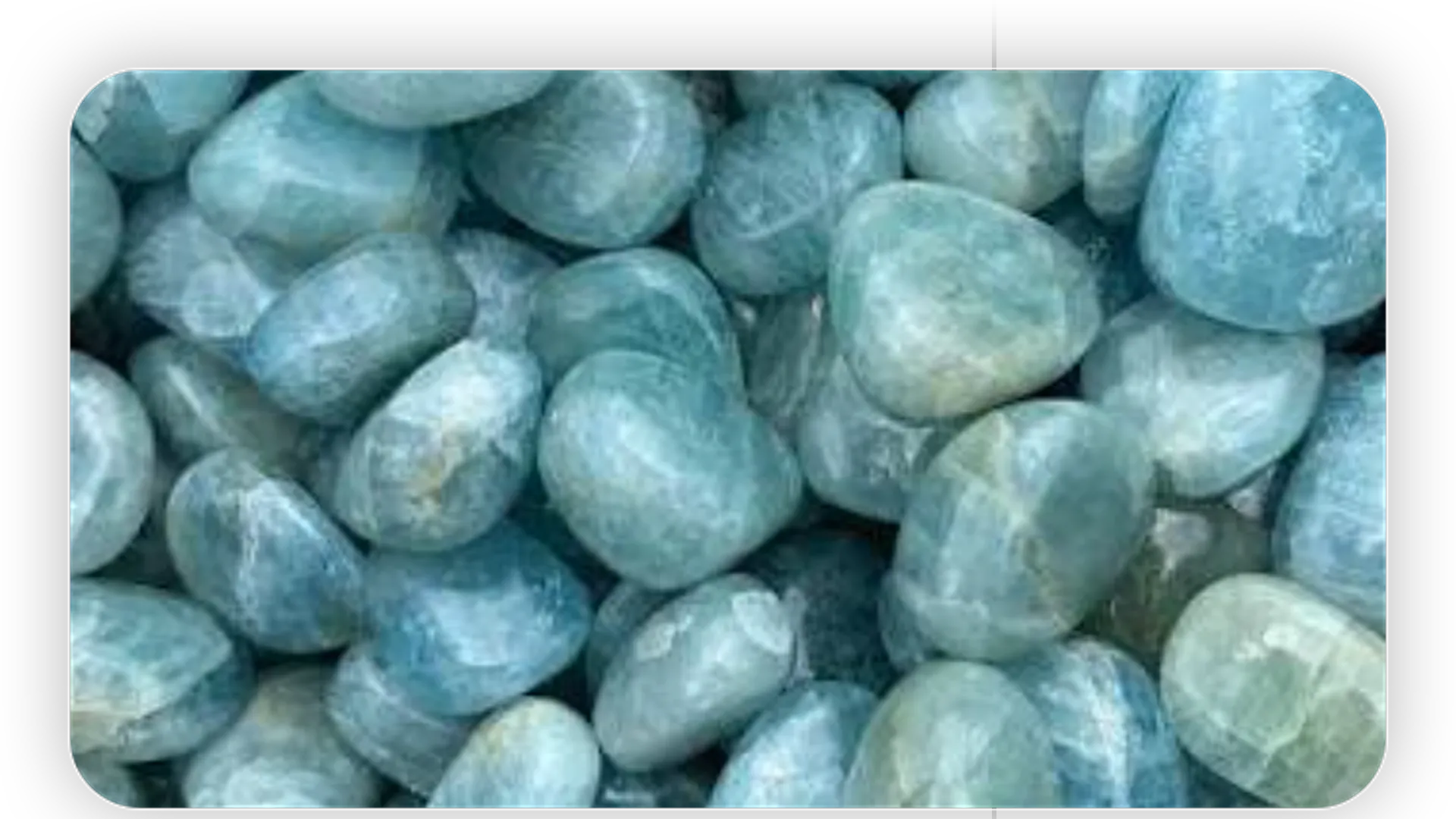
It rates 7.5 to 8 on the Mohs scale, with a specific gravity of 2.68 to 2.74, a vitreous luster, and usually high clarity, sometimes with fine tubular inclusions. Most aquamarine on the market is untreated or only lightly heated to remove yellow and brown modifiers, so the color you see is close to the color the stone grew. Care sits in the easy tier: rinse and dry for daily wear, avoid long soaking, apply fragrance before wearing, and store separately when not worn.
Traditionally, aquamarine is associated with calm, clarity, and communication, often described as the stone for saying the thing clearly. In our Five Elements framework, aquamarine belongs to Water, carrying clarity of emotion. For the sideways comparison between the three blue stones, see our sister post Aquamarine vs Blue Topaz vs Turquoise, which this article does not repeat.
Bloodstone: The Original March Birthstone
Bloodstone, mineralogically heliotrope, is a variety of chalcedony, in the same family as agate, with the chemistry of silicon dioxide. It grows no crystal faces, so it turns up as botryoidal masses rather than six-sided prisms.
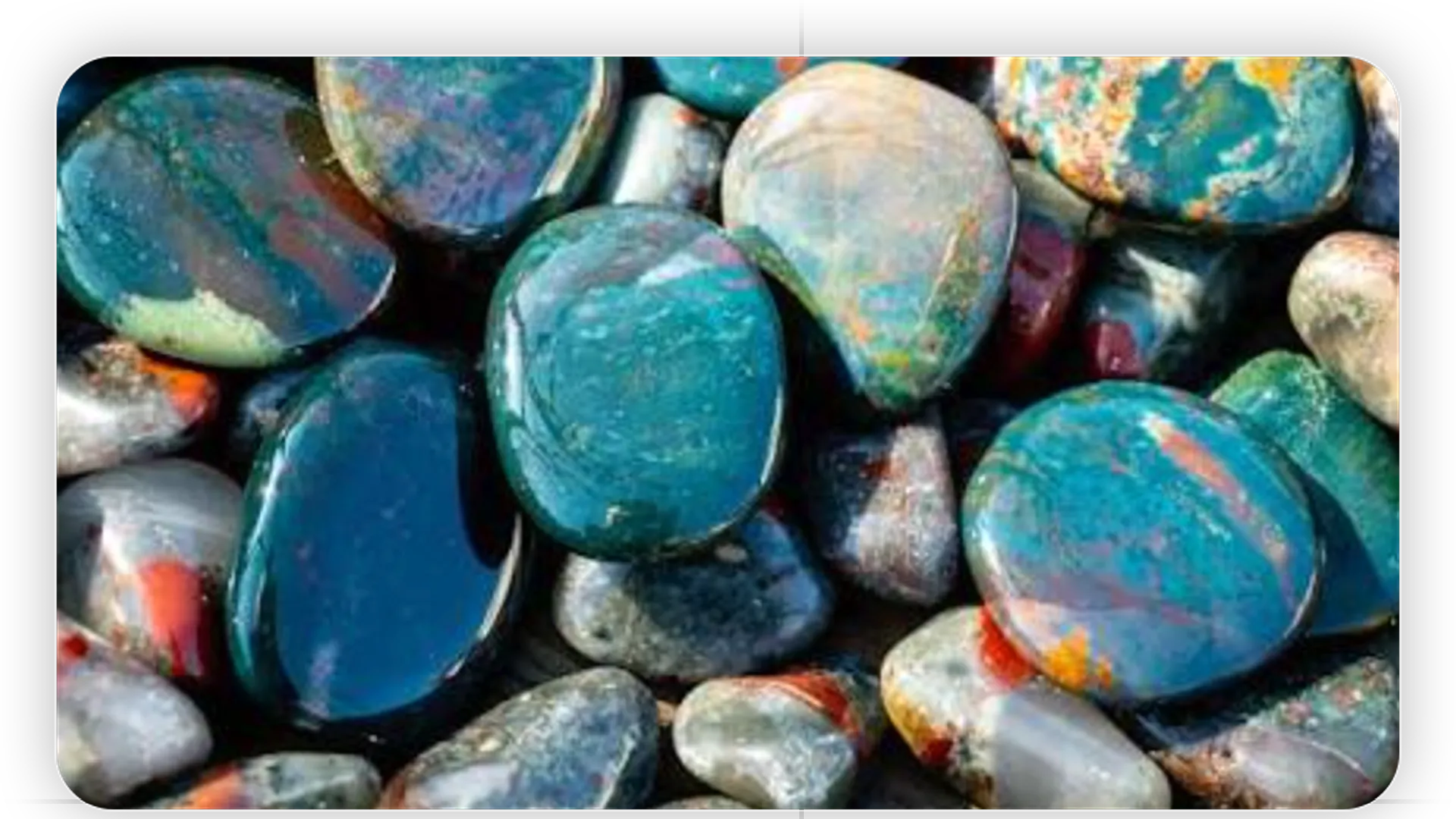
Its look is unmistakable: dark green to deep green ground with red spots. The red comes from hematite, iron oxide, dispersed through the stone, and the green relates to impurities like chlorite and amphibole. It rates 6.5 to 7 on the Mohs scale, has a specific gravity around 2.61, and is opaque.
The stories around it are older than its mineralogy. Roman soldiers were believed to wear bloodstone for courage before battle. In the Middle Ages it was known as the stone of St. Stephen, and the red dots were read as the blood of martyrdom. Pliny the Elder recorded it in the first century, and later magical traditions read it as a stone of invisibility. These are historical beliefs, things people of the time held, not claims this article repeats as fact. For how the chalcedony family divides internally, see Agate vs Jasper.
March Birthstone Color: What Each One Looks Like
People searching the color are usually trying to confirm they are buying the right stone before checkout.
The aquamarine birthstone color band runs from near colorless through pale blue to blue-green. Deep natural aquamarine is scarce, which is why it costs more. If an aquamarine's color looks unusually full, ask whether it was heated, and most sellers will say so plainly.
Bloodstone has exactly one look: dark green ground with red dots. Here is a field check: look at how the dots are distributed. Natural bloodstone carries dispersed, irregular dots, and no two stones repeat. Dyed imitations tend to be too even and too saturated, as if the red were sprinkled on. When the dots look suspiciously tidy, ask the seller.
One line to close on: blue means aquamarine, green with red dots means bloodstone. That is faster than any hardness or specific gravity number.
Which March Birthstone Should You Choose?
Choose aquamarine if you want today's standard answer: the modern March stone, mostly natural color, hard enough for daily wear, and a clean blue. We carry it, see below.
Choose bloodstone if you want the older stone, the deeper look, or a gift chosen by the traditional list. We do not carry bloodstone. We will not invent a buying link, and we will not send you to a competitor.
On budget, one sentence is enough: bloodstone is generally the more affordable of the two, and prices vary by seller, so this article prints no numbers. Compare at the cart, where the real price shows.
In the Five Elements, aquamarine belongs to Water. If you are unsure which element fits you, our Element Quiz takes about a minute.
What About Rings, Necklaces and Earrings?
The most common finished forms for March stones are actually rings and pendants: aquamarine has been a staple of engagement rings since the Art Deco period, and bloodstone shows up more in men's signet rings and pendants.
We carry neither form, and we only make bracelets, so here is the reason plainly: the bracelet is the steadiest form for daily wear. Rings and pendants stick out at the fingertip and the collarbone, where knocks and snags happen at a different order of magnitude than at the wrist. A bracelet sits against the wrist bone and takes the fewest hard impacts of the three forms. Stretch-cord bracelets also should not be soaked for long, because the cord fails first, so rinse and dry quickly.
If you arrived here from a search like "march birthstone ring," this article answers every question about the stones themselves, but the only buying form we offer is the bracelet.
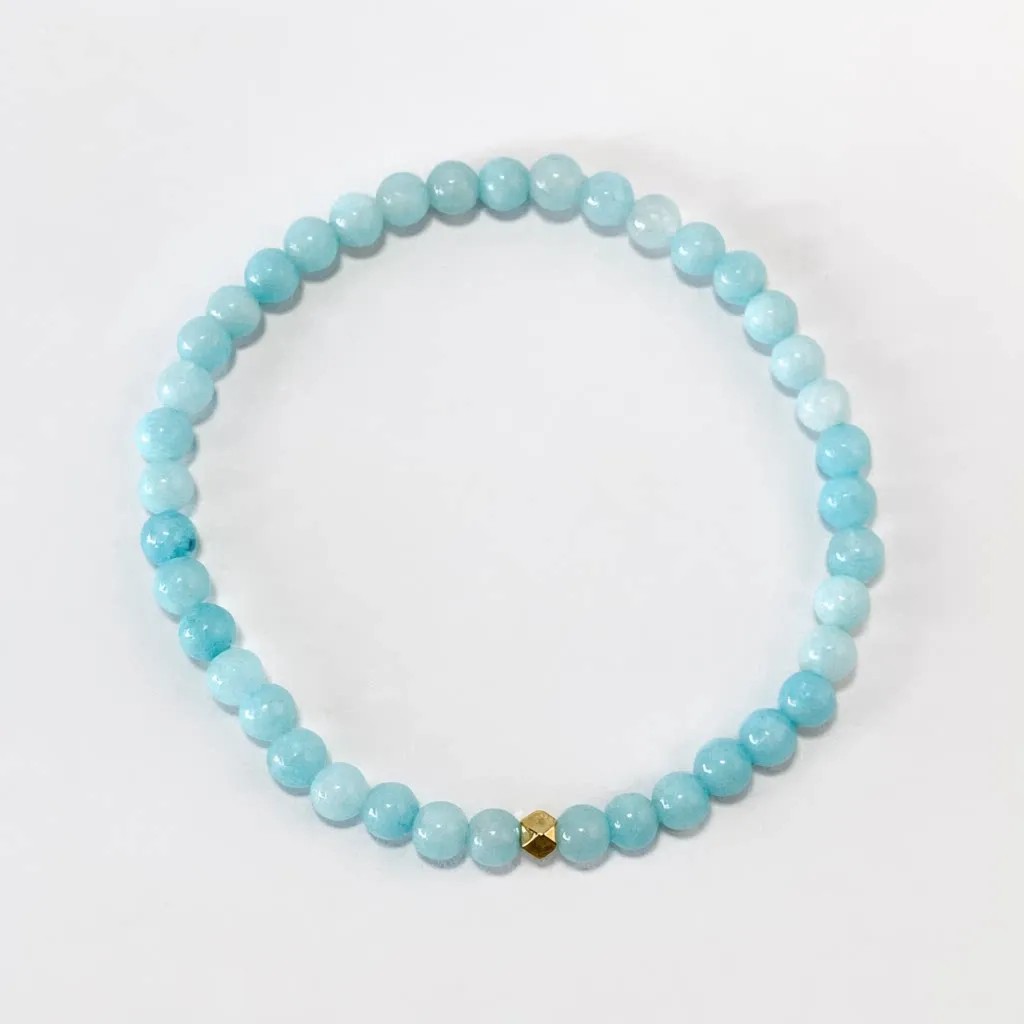
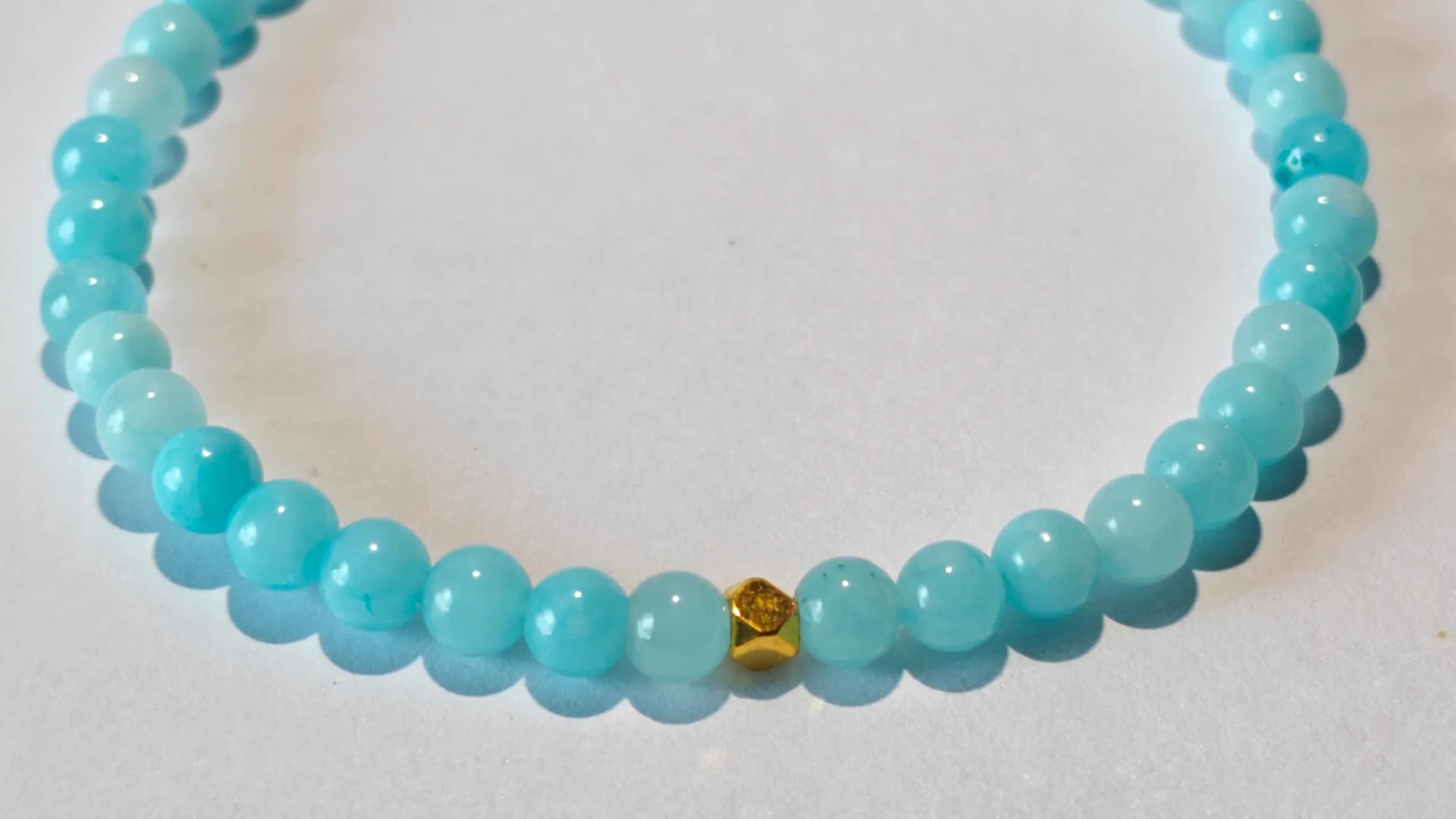
Our Aquamarine Bracelet
4 mm natural aquamarine beads on a durable stretch cord, sized to fit most wrists at about 7 in / 18 cm. Pale to blue-green natural tones, Water in the Five Elements.